Category: Uncategorized
Sports Physician Advises Parents Not To Allow Children To Play Football
See on Scoop.it – To play collision sports or not to play?
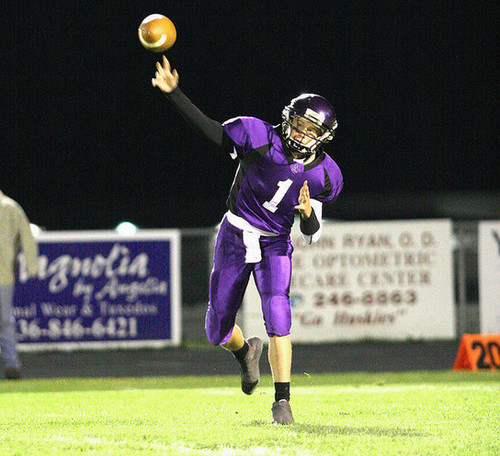
Sports Medicine physician Dr. Pietro Tonino of Loyola University Medical Center advises parents of high school athletes not to allow their children to play football because of the high risk of injuries they may sustain.
Not allowing children to play contact/collision sports due to concussion is alarmist and unwarranted – rather focus on the correct management of the injury once it happens.
While collision/contact sports such as American Football and rugby are associated with a risk of concussion, there is presently insufficient evidence to deny anyone access to these sports.
Yes, there are thousands of Football-related concussions per year, but how many hundreds of thousands of children participate in Football every year? And is Football more dangerous than driving your children in your car? These are questions that need to be considered for perspective.
This being said, once a child has incurred a sport-related concussion. he/she should be removed from the game immediately. Thereafter, the parents need to be actively involved in process of managing the child to full recovery before returning to play.
The child who is not being provided this optimal managment should not be allowed to play Football or rugby – let the majority, who are managed adequately, continue having fun!
See on www.hngn.com
George Smith – Houdini of the Pitch Side Concussion Assessment (PSCA)?
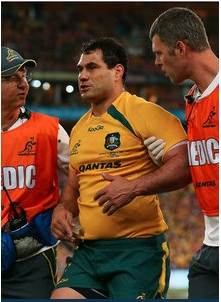
(Picture courtesy of http://www.planetrugby.com)
George Smith being allowed to return to the B&I Lions vs Australia final test after a clear cut concussion is indicative of the PSCA being used as a “get out of jail” card.
The All Blacks version of this test is clear in that it should ONLY be performed for ambigious cases of concussion (http://files.allblacks.com/nzru_media_releases/2012/08_August/ITMC_PSCA_Process.pdf). The test is NOT required for a clear-cut concussion, which has one or more of the following characteristics:
- Tonic posturing
- Convulsions
- Loss of Consciousness (LOC) – as confirmed by medically trained person
Whether medically trained or not, it was obvious both at the time and while watching the many repeats of this incident that Smith had LOC and therefore did not require the PSCA to confirm his diagnosis. Furthermore, he couldn’t walk off the field unaided (not a “definition” of concussion, but noteworthy as to his lack of recovery from the incident).
This is unfortunate as the IRB took an enormous and admirable step in initiating the trial of the PSCA purely on the basis of improving the welfare of it’s players. As with any new trial, there could always be “teething issues” – and I assume this is one such issue that will be resolved quickly so that this test will have the intended effect.
Risk of rugby-related catastrophic injury acceptable in SA

This was shown in a scientific paper that looked at SA’s risk on a scale designed by a leading researcher in the field, Dr Colin Fuller – injury risk advisor to RFU and FIFA. The full paper, which shows an average rate of 2 catastrophic injuries per 100,000 players in SA, is available here: http://bmjopen.bmj.com/content/3/2/e002475.full.pdf+html .
Despite this relatively “good” news, this paper also showed that possible “higher risk” groups were the adult/senior age group and the front row players, particularly during the scrum.
The adult/senior players “higher risk group” could be explained by factors such as “weekend warriors” (players who don’t attend practice and therefore are not adequately conditioned) or the different law variations at the under 19 version of the game.
The front row during the scrum “higher risk group” is concerning as scrums occur relatively infrequently in comparison to say, the tackle, in a typical rugby match. This should be an area of concern, and these players, are therefore at a relatively higher risk during this phase. Luckily, SARU/BokSmart responded to this information immediately and modified their scrum laws in order to mitigate this risk (http://www.supersport.com/rugby/sa-rugby/news/130213/New_scrum_laws_for_schools_club_rugby). The IRB followed SARU’s move shortly afterwards by altering scrum laws internationally http://www.irb.com/newsmedia/mediazone/pressrelease/newsid=2062780.html).
Will these law changes be effective in reducing catastrophic injuries in the scrum? Watch this space…
 Rugby Science