What we understand about concussion & what we want to find out – The NZ RugbyHealth Study
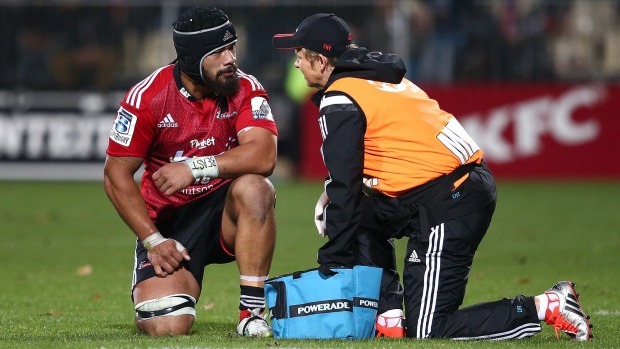
Jordan Taufua of the Crusaders is checked by team doctor Deb Robinson after a head knock last year.

Jordan Taufua of the Crusaders is checked by team doctor Deb Robinson after a head knock last year.

This article was originally published in http://www.stuff.co.nz/sport/rugby/opinion/83867218/what-nz-rugby-understands-about-concussion-and-what-it-wants-to-find-out

The issue of concussion in contact sport has rightly received a great deal of focus over the past few years. When New Zealand Rugby and World Rugby approached AUT (Auckland University of Technology) in 2012 to commission a study of retired rugby players, research examining health issues among former sportspeople was largely limited to American Football. We’re now seeing a range of research being carried out across many sports.

At the time the project was intended to involve data from 600 former players using web-based data collection, and 75 former players using laboratory based data collection. Recruitment was difficult at the time. Given increased media, player and public awareness of concussion issues, recruitment would likely be much easier if the study was conducted now.

Players’ health outcomes were compared for 100 professional rugby players, 195 community rugby players and 65 non-contact elite sports players, with the potential impact of head injuries and long-term health outcomes being one focus of the study.

AUT’s experience and world-leading research techniques were invaluable. Participants in the study undertook a variety of tests, including the CNSVS (Central Nervous System Vital Signs) test . This test is designed to be used in conjunction with a neuropsychologist’s clinical assessment.

However, it can be used to examine how well groups of people are performing compared to each other and a normative sample from the United States, and as a triage tool to refer people for further evaluation. People who complete the CNSVS test would need to be formally assessed by a neuropsychologist to gain individual feedback of the meaning of the results.

The type of study design we used can’t show causality, partly because we don’t know whether, or to what extent, the groups of players differed on the measures we used to examine cognitive functions before they played sport. While the differences identified between players who suffered repeated concussions and those who didn’t are concerning and require closer examination, the effects on the whole were small. Scientifically we need to remain circumspect about how confident we can be that the differences we observed will hold among other study groups, or exist in the wider population.

A single study rarely provides definitive answers to the research question at hand – science tends to work in a cumulative manner. Although we study samples of people, and look at the effect in the sample, what we need to know is whether the effect exists in the wider population. We use statistical techniques to help make inferences about the likelihood of the effect actually being present beyond the study group. The results of multiple studies build an evidence base upon which people can have increasing confidence that the effect being studied is likely to exist beyond the sample groups that have been studied. The AUT researchers, and NZ Rugby, are working independently with other groups internationally to gather more evidence.

Keeping an open mind scientifically is a different thing from not accepting the potential implications of the study. Both World Rugby and NZ Rugby have recognised that there is a potential link between playing contact sport and some forms of dementia for a number of years, and are acting according to the ‘precautionary principle’. In other words, even though we don’t know for sure whether such a relationship exists based on the available scientific evidence, we are acting as though it does. We are trying to manage and minimise risks associated with concussions by raising public awareness of the injury, implementing injury management practices that reduce risk, and conducting further research into the issue. As evidence continues to emerge, we will continue to take all reasonable steps to protect the health and well-being of participants.

What we know from the NZ RugbyHealth study is that it met its aims of describing areas of potential benefit or concern. It was envisaged that the “snap-shot” in time of the study design would provide information that could be used to design prospective studies. The NZ RugbyHealth study has been an important first step in our understanding more about the likely long term effects of playing rugby.

So, in conclusion, while it doesn’t look like playing rugby is associated with profound impacts on cognitive function in general, former players as a group performed slightly worse than non-contact players on several of the tests used. In addition, slightly more players than would have been expected if there were no issues, scored at very low levels on some variables. The important next stage is to do the responsible thing and find out more about the issue, including, for example, whether dementia rates among former players differ from those among non-players. While rugby is already working on this, we’re not alone in doing so. Increased research, increased education and increased focus to remove the risks of head knocks in contact sports around the world will benefit us all.

Ken Quarrie

New Zealand Rugby Senior Scientist
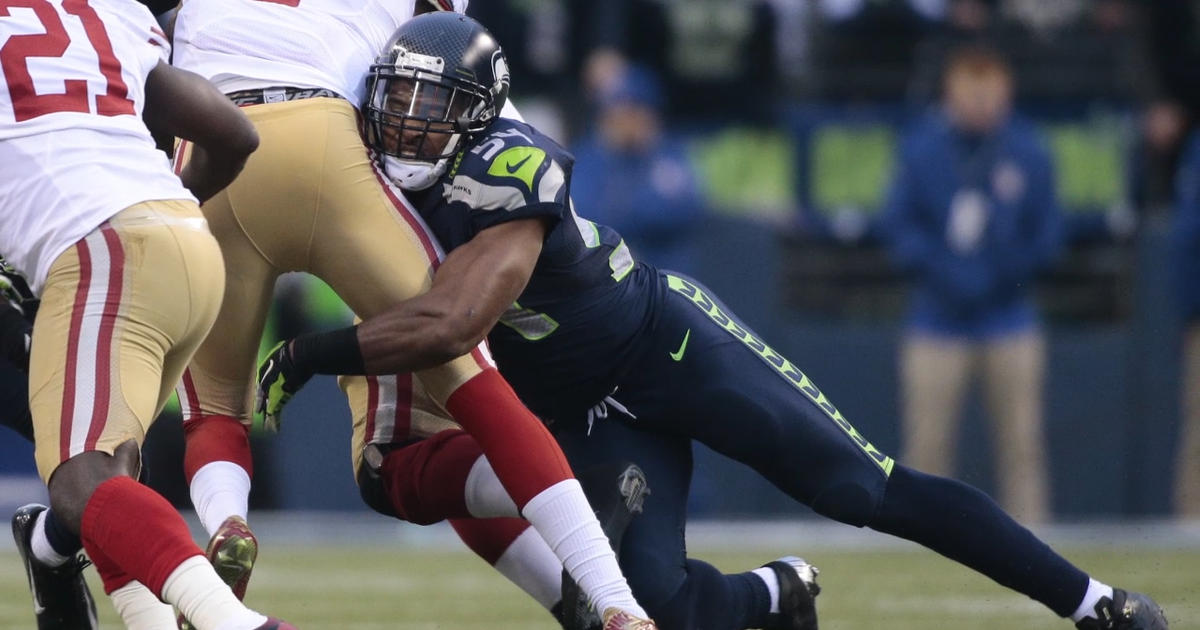
Rugby-style tackling in American Football

2016seahawkstacklevideo

There’s less than a week left until the kick-off of the 2016/2017 NFL season. The question is, will we see more coaches implementing rugby tackle training into their practice sessions?

The current Seattle Seahawks coach, Pete Carroll, has overseen the introduction of rugby tackle technique training in his team’s practice sessions since he took over in 2010. The emphasis of this is to use the shoulder as the primary point of contact during tackling and to avoid direct contact with the head. Here is the franchise’s tackling instructional video for those of you who have not yet seen it. The Seahawks boast quite an impressive recent performance record as they have qualified for the play-offs in five of the past six seasons, were winners of Super Bowl XLVIII in the 2013/2014 season, and were runners-up in Super Bowl XLIX in the 2014/2015 season. Their success is often attributed to their highly efficient and stingy defensive unit. Could this be in part due to the introduction of this rugby tackling protocol?

Research has shown that certain tackling technical criteria are associated with successful tackle outcomes in professional rugby union(Hendricks et al., 2014). Some of these correct tackling cues have also recently been shown to reduce the probability of an injury outcome in general injuries (Burger et al., 2016) and for concussions (Hendricks et al., 2015) in high-level under-18 South African rugby union players. There is limited research exploring the detailed characteristics of tackle technique and associated performance and injury outcomes in American Football (AF). It is worth noting that ‘spear tackling’ in AF i.e. using the helmet as a weapon during head-first tackles, has been outlawed due to the potential risk of catastrophic head and neck injuries (Heck et al., 2004; Boden et al., 2007). It may be valuable to assess the discrete differences between traditional rugby and AF tackling techniques to determine if there are indeed differences in safety and performance outcomes.

Thoughts?

Nicholas Burger @it_is_burger

(PhD Candidate)

Conditioning for Team Sports: Part 2

Determining your Athlete’s Conditioning Profile

When designing your conditioning programme, it is not only important to understand the energy systems that contribute to the success of the particular sport but also the time of the season as well as the level of conditioning that your athlete/s currently possess. Therefore, it is generally advisable to start with some base-line measurement that allows you to identify what your athlete/s require from the programme that you will be compiling.

Generally, I would advise that 1 anaerobic dominant test and 1 aerobic dominant test be used to determine the conditioning profile of your athletes. For the purpose of this post, I will give you two examples of tests that can be performed.

Maximal Aerobic Speed Test (MAS)

The MAS is a very easy to administer test and can be conducted using a cardio modality of your choice. The MAS can be conducted either by using a predetermined distance (1,2 – 5 km) or duration (e.g 4 – 6 min), making it a very popular means of assessing aerobic capacity in athletes.

Some of the variables that you would need to record are as follows;

  • Total Distance
  • Total Time
  • Heart Rate Max

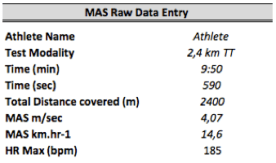
For simplicity, I will use the 2.4 km time trial run as the test of choice. Athletes would need to perform a 2.4 km run over a predetermined course. The time to completion as well as max heart rate should be recorded at the end of the run. Table 1 below is an example of data captured from a 2.4km based MAS test.

Picture4

Picture3

The above data will allow you as an S&C to prescribe your conditioning sessions according to the relative intensity of the individual. This can be done according to distance covered per unit time at a specific percentage of MAS depending on the time of the season and duration of the interval

6 x 30m Repeat Sprint Test

The 6 x 30m repeat sprint test allows you to assess the anaerobic capacity of the athlete. The SUM of the total time to complete all 6 x 30m sprints has been shown to be the most reliable variable, however the % decrement is also a useful variable to use to assess the athletes “drop off”. The table below shows the results of a 6 x 30 test for 5 athletes.

Picture2

By assessing the athletes aerobic and anaerobic capacity you will be able to identify the current condition of your athlete. For example, if your athlete has a really good anaerobic profile but poor aerobic or endurance profile, it is possible that he or she may “tap” into their anaerobic power reserve quicker than they would like and possibly “hit the wall” earlier than expected. This is because the anaerobic energy system cannot sustain the energy production for a prolonged period of time, and if the aerobic system is not well developed this is likely to occur.

Thus if we look at figure 1 below, we will see three different profiles. Say for example these are 3 rugby players, player “A” would likely be the most powerful athlete, however due to the high anaerobic contribution he / she is likely to display signs of fatigue very quickly. Player “B” would be able to produce a fair amount of repeated high-intensity bouts, but would show signs of fatigue quicker than Player “C”, as player “C” has a higher aerobic contribution which will allow him / her to recover quicker from repeated bouts of high-intensity activities. Therefore, even in sports that are dominated by repeated bouts of high-intensity sprints, the aerobic contribution is pivotal to their ability to maintain their power output for prolonged periods of time. It is, however, important to consider how you go about establishing the aerobic capacity in these athletes. This will be discussed in part 3.


Screen Shot 2016-08-09 at 2.31.12 PM

Screen Shot 2016-02-04 at 2.28.32 PM