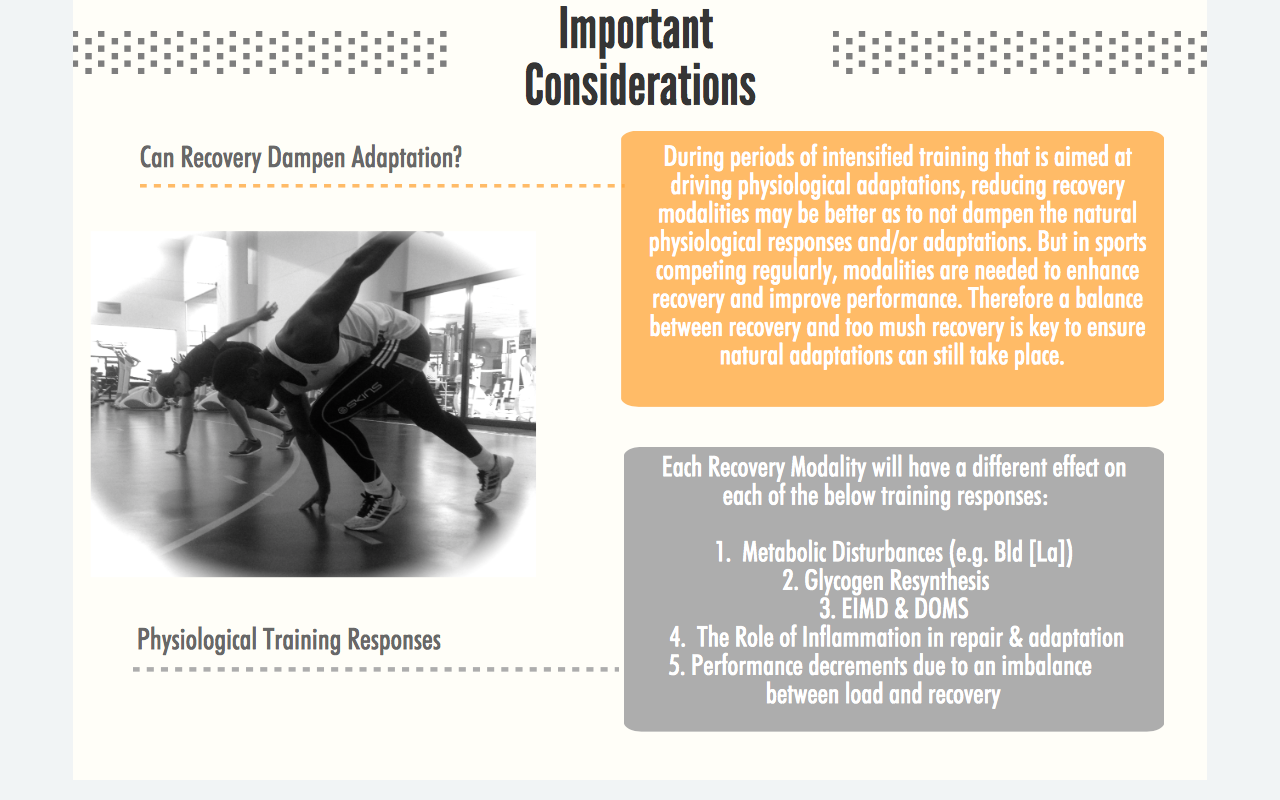
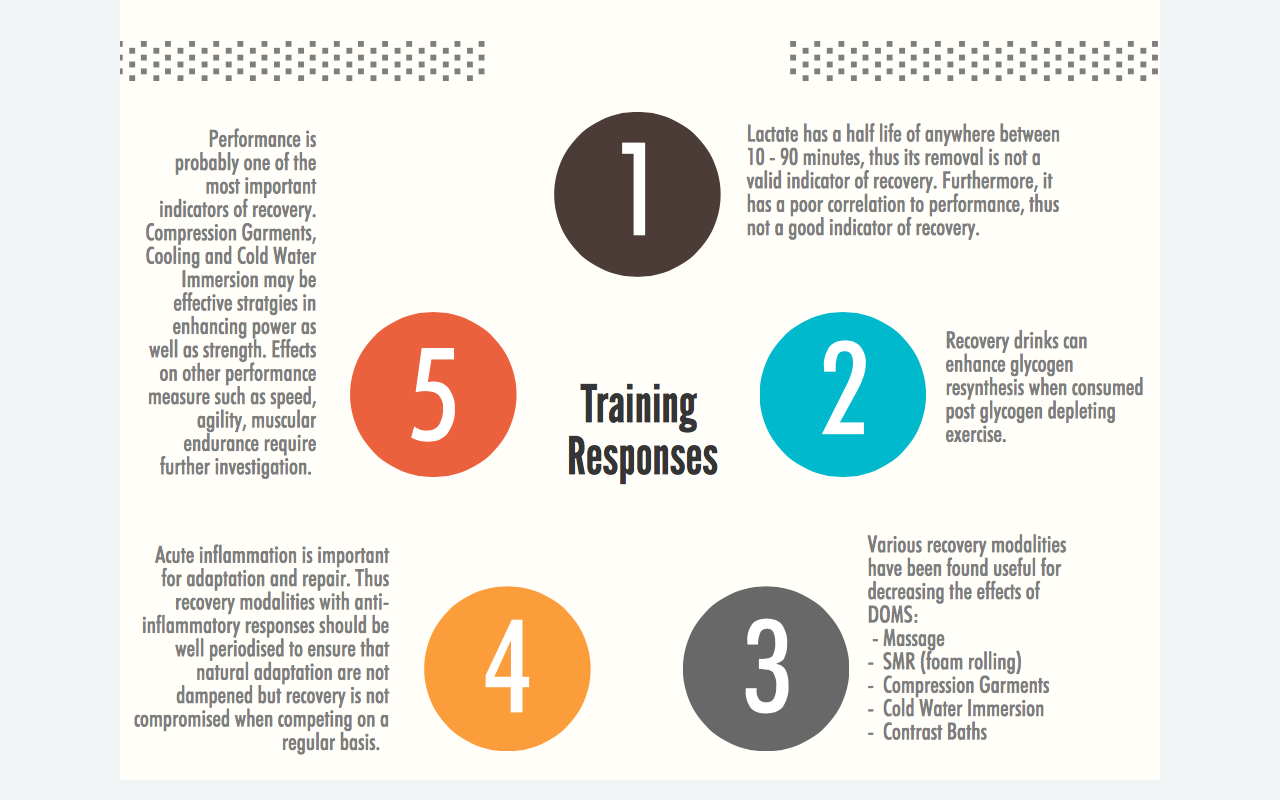
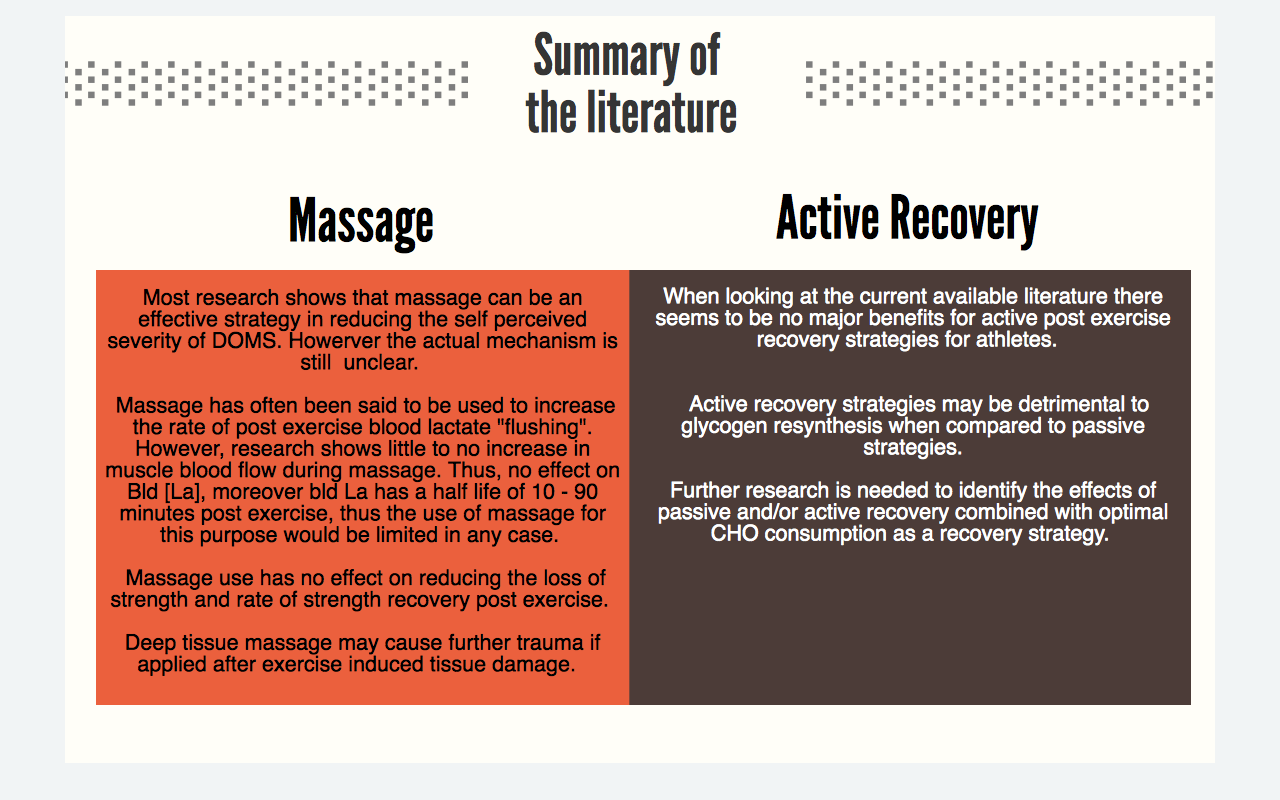
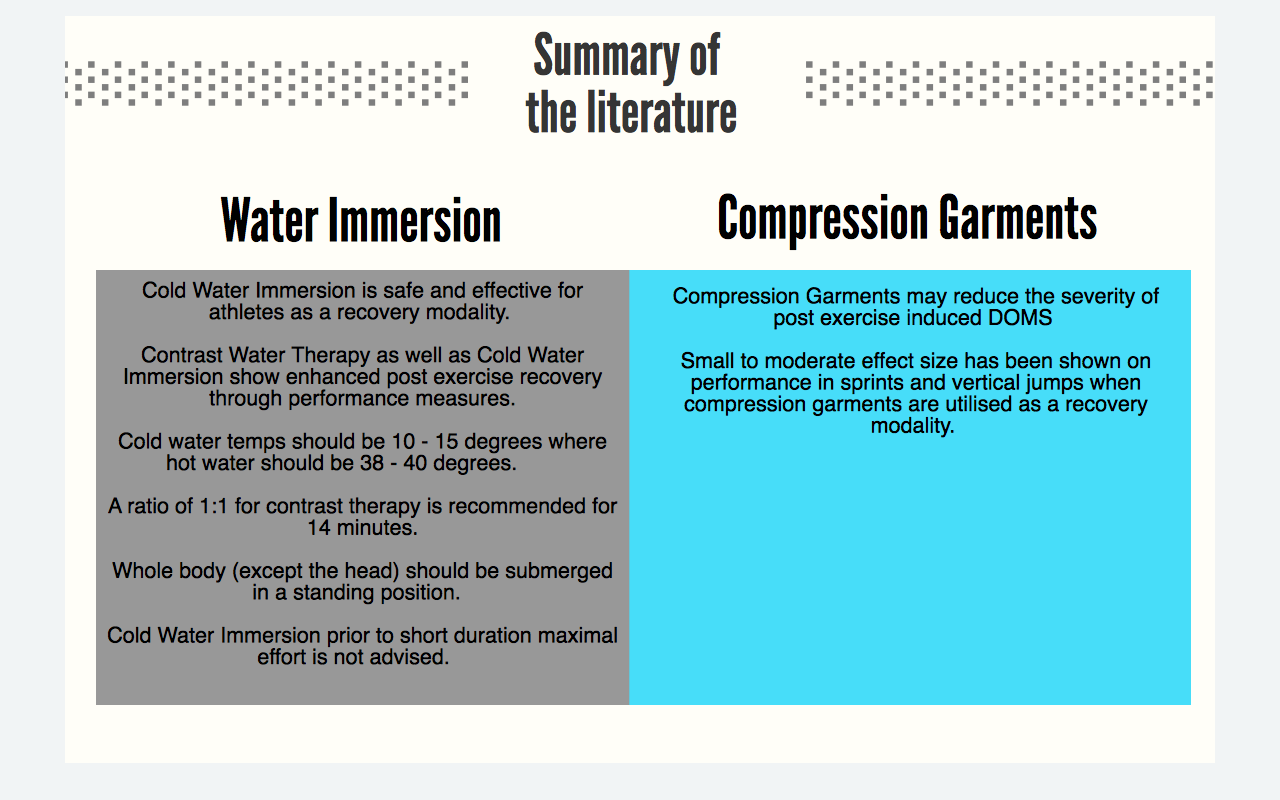
Recovery Strategies for High Performance Athletes



The authors of this article state that there is no consistent concussion definition applied clinically or in research and through this systematic review attempt to describe the signs and symptoms of this condition.

We presented this article, entitled “Concussion Guidelines Step 1: systematic review of prevalent indicators” [1] using the following slides, available through Slideshare.
In summary, based on the authors’ premise that no definition exist for concussion they attempt to summary the literature on consistent indicators of this condition (“In the absence of physiological measure, evidence of concussion are signs, symptoms and objective measures of neurologic or cognitive dysfunction”). These indicators were best summarised by Sports Medicine Research:
“Prevalent and consistent indicators of a concussion include observing disorientation or confusion immediately after the injury, and slower reaction time, poor balance, and impaired verbal learning and memory within 2 days after the injury.”
Our only contention with the article, which is largely acknowledged by the authors, is the possibility of false positives and false negatives existing in the “concussion” cohorts they examined. In other words, some of the the “concussed” individuals may have not have an actual concussion, but more likely is that some of the “concussed” individuals may have been missed. These issues would obviously affect their outcome, but pragmatically speaking, this is not an issue that may never be eliminated in this very tricky field. As this is the first in a series of papers from this group to attempt to reduce the ambiguity of this condition, we can only hope more more clarity in future research.
We’d love to hear your thoughts on this highly contentious issue!
References:
1. Carney N, Ghajar J, Jagoda A, et al. Concussion guidelines step 1: systematic review of prevalent indicators. Neurosurgery. 47, S3-S15. 2014
The tackle is a physical contest between opposing players contending for territory and ball possession. During an 80 minute rugby union match, a player will physically engage in the tackle contest, whether as a ball-carrier or tackler, between 10 to 35 times depending on the position of the player (Deutsch et al., 2007; Quarrie and Hopkins, 2008). During a match, tight forwards (position numbers 1-5, who primarily compete in the set phases such scrums and lineouts) engage in the tackle approximately 10-25 times, loose forwards (position numbers 6-8, who mainly competes for possession of the ball at rucks and assist the tight forwards in set pieces) are involved in 25-35 tackles, inside backs (position numbers 9,10,12,13, whose key responsibility is to execute tactics and distribute the ball) competes in 20-25 tackles, and outside backs (position numbers 11,14,15, who are typically quicker and expected to run into open spaces to cross the advantage line and score points) engage in 10-15 tackles (Deutsch et al., 2007; Quarrie and Hopkins, 2008).

A player requires a high level of skill, physical tolerance and resistance to fatigue to repeatedly engage safely and effectively in the tackle, therefore understanding the physical demands of a tackle is important with many applications such as design and development of proper training drills and equipment, planning and management of training and recovery between training sessions and matches.
The biomechanics of injury risk can be explained by the event either resulting from an overload of the system’s tolerance levels, or a reduction in the system’s tolerance levels through micro trauma to a point where normal loads cannot be tolerated (McIntosh, 2005)
For the tackle, studies have shown a positive relationship between the number of tackles made during matches and markers of muscle damage (Smart et al., 2008; Takarada 2003). Also, repeated tackling decreases the amount of force produced by the tackler, which may be attributed to fatigue (Usman et al., 2011).
In rugby union and rugby league studies, the specific physical and technical requirements for safe and effective contact in the tackle have been highlight (summary of tackler below).
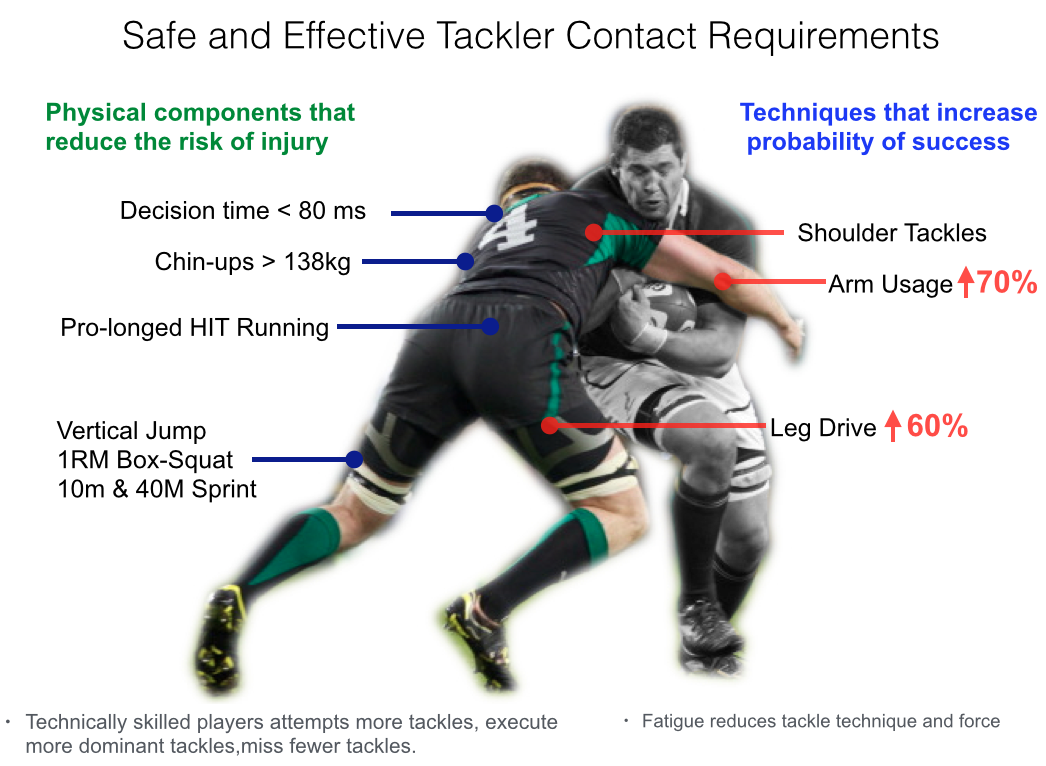
Based on this, we propose a theoretical model for the relationship between the number of tackles in which a player engages in (acute or chronic fatigue), magnitude of impact (energy load), markers of muscle damage (micro trauma) and how this relationship interacts with tackle injury risk (tolerance overload or reduction) and tackle performance (Hendricks and Lambert, 2014).
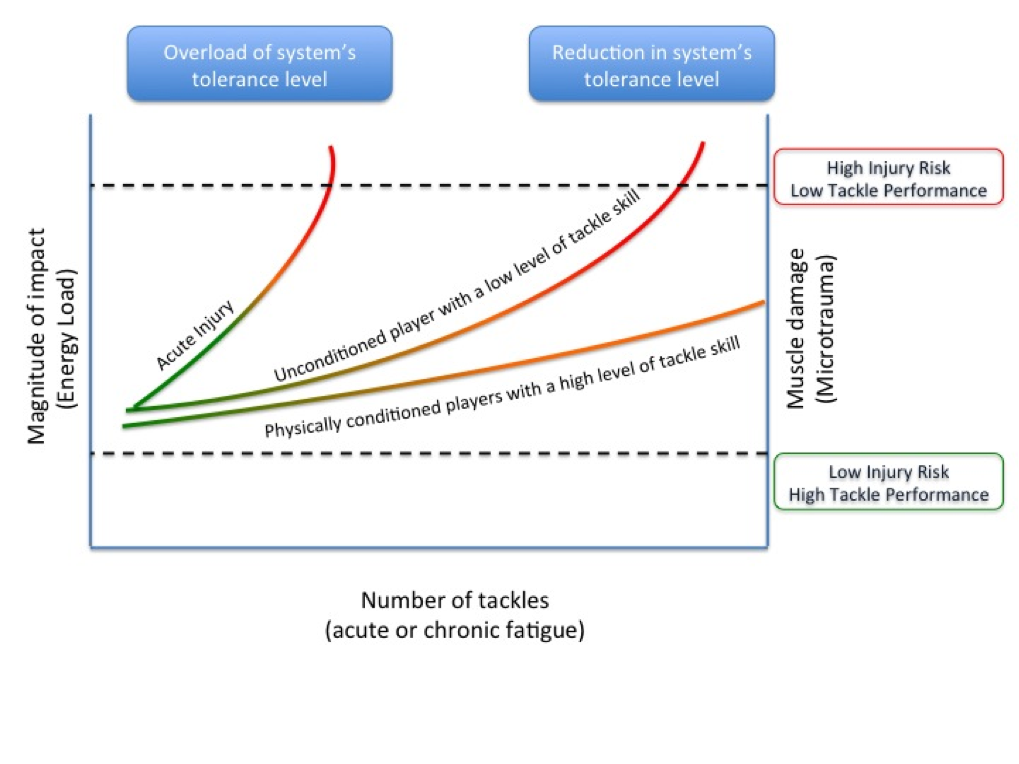 Players may have an upper limit for being able to endure repeated high energy impact tackles. If this upper limit is exceeded the risk of injury is substantially increased, and tackle performance is noticeably decreased (figure below). This upper limit is reached either through one or more very high-energy impact contact situations or, accumulates over a match or season following repetitive lower-energy impact situations. However, effective tackle skill training, proper physical conditioning, strength, power, equipment and attitude/motivation can offset this upper limit (McIntosh, 2005). For example, physically conditioned players with a high level of tackle skill may have the technical ability and physiological capacity to minimise the energy load on the body, thereby increasing their tolerance level for physical loads.
This paper was published in the Journal of Sport Science and Medicine. The full article can be found here http://www.jssm.org/letter.php?id=jssm-13-715.xml .
Sharief Hendricks
 Rugby Science