The concussion puzzle: is there a risk profile for sport-related concussion?
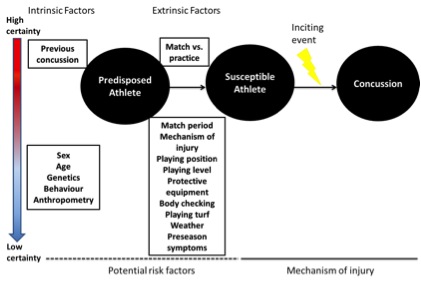
UntitledFigure 1: A proposed model summary of the systematic review of literature and adapted from Meeuwisse’s athletic injury aetiology model [7].

From all previous risk factors identified for sports concussion, only a previous concussion(s) and playing a match compared to practice has strong scientific evidence.

Concussion is caused by a force transmitted to the head resulting in symptoms ranging from a severe headache to loss of consciousness and is one of the more severe sports injuries with professional club rugby players missing up on average 12 days during two seasons [1,2]. A reported compensation pay-out of over $700 million by the American National Football League (NFL) to over  4500 former NFL players or their relatives for severe and debilitating complications, they claim resulted from  concussions sustained whilst playing NFL [3,4]. This widely publicised court case has raised concern over concussion injuries not only in athletes and their families across sports [5], but also sporting organisations such as the International Rugby Board (IRB), which has implemented a controversial side-line concussion test for suspected concussions [6].

However, sport related concussion still remains a hotly debated injury mainly due to the  lack of understanding of the aetiology and the individual variations in symptom presentation, which makes diagnosing and managing concussions challenging. In light of this, our research team undertook a comprehensive systematic review of the scientific literature on concussion risks that was recently published online (http://bjsm.bmj.com/cgi/content/full/bjsports-2013-092734). After a critical search and evaluation of over 13 000 articles, we identified 86 scientific research articles investigating possible risks for concussion in sport with the main findings summarised below:

  • Athletes who have experienced a previous concussion(s) and playing a match compared to practice were the only concussion risks supported by strong scientific evidence.
  • Although experts often state children and women are vulnerable groups[8], gender and age were amongst several potential risk factors for concussion which require further robust studies to confirm risk effect.

Although there is an abundance of papers on concussion in the scientific literature,  there is still a need for robust research, preferably follow-up studies with sufficient sample sizes, to confirm concussion risks.

We suggest that there are inter-individual differences in the aetiology and manifestation of concussion and as such we are conducting a research study to investigate the genetic and non-genetic role underlying concussion risk and recovery. The future goal of this study is to further understand concussion in order to provide a model for individual diagnosis and therapy strategies improving concussion management especially in vulnerable groups such as youth players. To this end, we are in the process of inviting the top rugby-playing schools in South Africa and thus far extend our gratitude to Wynberg Boys’, Paarl Boys’, Paarl Gimnasium, SACS and Boland Landbou high schools who have eagerly accepted our invite to participate in our research study. We are equally excited to embark on this venture with them, as well as other top rugby playing high schools, to investigate why the incidence of concussion is so high our youth rugby players.

References:

  1. McCrory P, Meeuwisse WH, Aubry M, et al. Consensus statement on concussion in sport: the 4th International Conference on Concussion in Sport held in Zurich, November 2012. Br J Sport Med 2013;47:250–8
  2. Brooks JHM, Fuller CW, Kemp SPT, et al. Epidemiology of injuries in English professional rugby union: part 1 match injuries. Br J Sport Med 2005;39:757–66.
  3. Boren C: NFL, ex-players reach settlement over concussion lawsuits. The Washington Post online, August 29, 2013. Available at http://www.washingtonpost.com/blogs/early-lead/wp/2013/08/29/nfl-former-players-to-settle-concussion-lawsuits-judge-says/ (accessed on 25 September 2013)
  4. Crepeau R: The NFL Concussion Settlement. The Huffington Post blog online, September 04, 2013. Available at http://www.huffingtonpost.com/richard-crepeau/nfl-concussion-settlement_1_b_3853120.html (accessed on 27 September 2013)
  5. Peters S: Moody: We used to treat concussion as a joke… now I worry about dementia. The Daily Mail online, September 22, 2013. Available at: http://www.dailymail.co.uk/sport/rugbyunion/article-2428431/Lewis-Moody-We-used-treat-concussion-joke–I-worry-dementia.html (Accessed on 29 September 2013)
  6. Guyer J: IRB to review sideline concussion test. The Wide World of Sports online, July 18, 2013. Available at http://wwos.ninemsn.com.au/article.aspx?id=8691586 (accessed 20 September 2013)
  7. Meeuwisse W. Assessing causation in sport injury: A multifactorial model. Clin J Sport Med. 1994;4:66–170
  8. Kutcher JS, Eckner JT. At-risk populations in sports-related concussion. Current sports medicine reports 2010;9:16–20

About the Authors:

Shameemah Abrahams majored in Biochemistry and Physiology for her undergraduate BSc (2008 – 2010) with honours in Physiology, specialising in Neuroscience, (2011) at the University of Cape Town (UCT). She is currently (2012-) in her second year as a MSc (Med) student at the UCT/MRC Exercise Science and Sports Medicine research unit, UCT. Her MSc project deals with both the identification of genetic and non-genetic predisposing factors of concussion risk in South African rugby players. Her research interests include brain injury, physiological changes during exercise and genetic predisposition to injury.

Sarah Mc Fie completed a BSc in Chemical, Molecular and Cell Biology, majoring in Genetics and Human Biology, in 2010 and an Honours specializing in Neuroscience in 2011 from the University of Cape Town.  She started her current degree, an MSc in Exercise Science, at the Exercise Science and Sports Medicine research unit, UCT, in 2012. Her MSc research project aims to identify intrinsic and extrinsic risk factors for risk and severity of sport-related concussions. Her research interests include genetics, neuroscience and sport.
Enhancing sports injury prevention research

Screen Shot 2013-09-22 at 9.29.40 AM

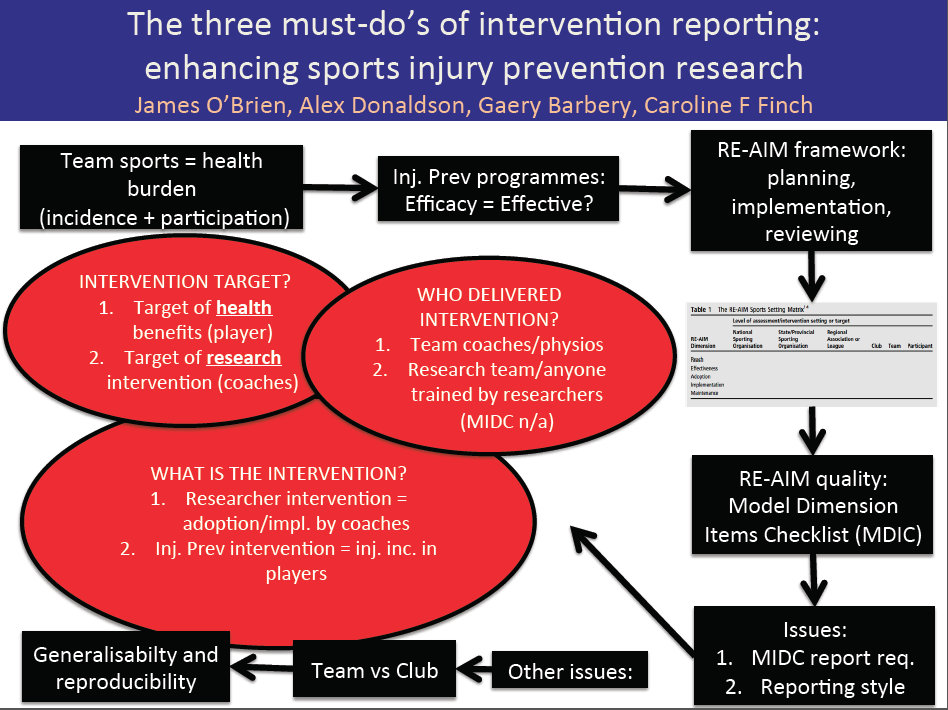
Figure 1. A summary of the editorial “The three must-do’s of intervention reporting: enhancing sports injury prevention research” by O’Brien et al.


Using Figure 1, we attempted to summarise the recent editorial from intervention experts James O’Brien, Alex Donaldson, Gaery Barbery and Caroline Finch from the Centre for Healthy and Safe Sport (CHASS) at the University of Ballarat, Australia in this post. Their article was entitled: “The three must-do’s of intervention reporting: enhancing sports injury prevention research” and was featured in the September addition of the British Journal of Sports Medicine 1. Although it was not in the original article, we have used BokSmart 2 (www.boksmart.com) as an example of an injury prevention programme, simply for the purposes of practical explanation. BokSmart is a nationwide injury prevention programme for Rugby that is being implemented by the South African Rugby Union (SARU). By educating coaches and referees, the programme aims to reduce catastrophic injuries in players.


In our opinion, the take home message of this editorial was that if you would like your intervention to be reproducible and generalisable – and this is an obvious goal of any quality researcher or programme evaluator – your evaluation needs to be very clear in its reporting.

While there are established frameworks such as “Reach, Effectiveness, Adoption, Implementation and Maintenance” (RE-AIM) and checklists such as “Model Dimensions Items Checklist” (MDIC) in place to plan, implement and evaluate injury prevention programmes 1,3, the reporting of these evaluations is often ambiguous, which hinders reproducibility and generalisability. This ambiguity can be reduced by ensuring three questions are answered during your reporting:

 1. Who is the intervention target?

  • BokSmart is an example of indirect intervention: coaches and referees are the actual target of the intervention (SARU educates them, not the players), and yet the players are targeted, albeit indirectly, for the health benefits (reduction in catastrophic injuries) of the intervention.
  • When reporting on the “participants” of the intervention, as the MDIC (checklist) requires, one needs to be clear and distinguish between the targeted health beneficiaries (players, in this case), and the target of the actual intervention (coaches and referees, in this case) if those are two distinct groups – as they are in BokSmart.

2. What is the intervention?

  • In the example of BokSmart, there are two levels of interaction occurring simultaneously: one between SARU and the coaches/referees (termed “researcher intervention”) and one between the coaches/referees and the players (termed “injury prevention intervention”).
  • The outcome measures or evaluations are very different for these two groups: in the researcher intervention (coaches and referees, in this case) the most appropriate assessment is the adoption and implementation (“A” and “I” of RE-AIM) of the programme in these groups, while in the injury prevention intervention (players, in this case) the most appropriate outcome measure would be changes in injury rates in the players (“E” of RE-AIM).

3. Who delivered the intervention and were they under researcher control?

  • Whoever provides the intervention to the health beneficiary (players in this case) is/are termed the “delivery agents” (coaches and referees, in this case). – there is an entire section dedicated to this group in the MDIC.
  • If the “delivery agents” are already affiliated with teams prior to receiving the intervention (as in the case of BokSmart), then they function very differently to “delivery agents” who are specifically trained for the intervention and then assigned to teams. This latter category of delivery agents are more like an extension of the intervention team, and should thus be evaluated and reported on differently.

Besides these three important aspects the other term that can cause confusion is the distinction between “teams” and “clubs”. A coach or coaching staff are associated with, and thus have control over, one team. A club may consist of many teams and coaches.

 Therefore, if one is to advertise/“show off” one’s particular injury prevention intervention to the rest of the world, one needs to be very clear to not only stick to the established frameworks and checklists, but also to answer the most important questions about the intervention:

WHO is/are the target(s)? WHAT is the intervention? Who DELIVERED the intervention?


 REFERENCES:

1.     O’Brien J, Donaldson A, Barbery G, Finch CF. The three must-do’s of intervention reporting: enhancing sports injury prevention research. British Journal of Sports Medicine 2013;

2.     Viljoen W, Patricios J. BokSmart – implementing a National Rugby Safety Programme. British Journal of Sports Medicine 2012;46:692–3.

3.     Finch CF, Donaldson A. A sports setting matrix for understanding the implementation context for community sport. British Journal of Sports Medicine 2010;44:973–8. 

“You can’t manage what you don’t measure.” Monitoring training load and recovery in team sports

Screen Shot 2013-09-06 at 12.28.39 PM

by Ben Capostagno and Wayne Lombard

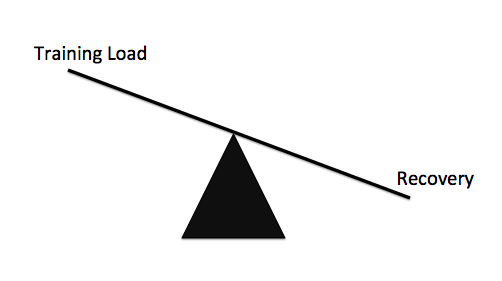
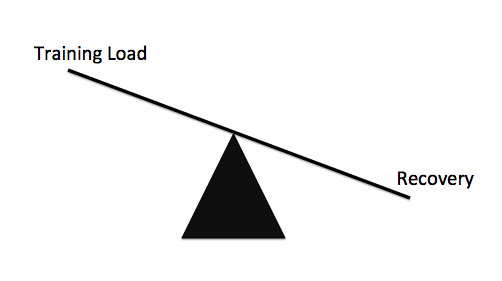
In a recent editorial for the International Journal of Sports Physiology and Performance, Iñigo Mujika highlighted the importance of quantifying training load.(3) If an athlete shows positive adaptation to training, it is important for the strength and conditioning coach to know the exact training load the athlete was exposed to. Likewise if the athlete shows a maladaptation to training, accurately collected training load data will indicate whether the training load was excessive or insufficient. One of the simplest ways to quantify training load is to multiply the duration of the session in minutes by a rating of perceived exertion for the session. For example, if a training session lasts 60 minutes and the athlete rates the session as 5 out of 10 for intensity, the training load should be 300 units.

Once the training load has been accurately quantified it is crucial to monitor how the athletes are responding to the imposed load. Daily monitoring has become more popular within sports science as athletes are constantly exposed to ever increasing training loads. The daily monitoring commonly takes the form of questionnaires and should include a subjective rating of fatigue. In addition, Kenta and Hassmen (2) identified four key areas of recovery that should also be monitored;

  • nutrition and hydration
  • sleep and rest
  • relaxation and emotional support
  • stretching and active rest

If the athlete is actively engaging in these four areas of recovery, but still reporting high levels of fatigue, then the planned training load should be adjusted accordingly.

It is important to partner the subjective measures of recovery with an objective measure. The most common target of objective measures is the autonomic nervous system. The autonomic nervous system is connected to a wide variety of systems within the human body and thus makes it a suitable target to monitor the overall well-being of the athlete.(1) Non-invasive measures of the autonomic system’s status include heart rate variability (HRV) and heart rate recovery (HRR). HRV appears to be gaining momentum as the objective measure of choice within teams and individual athletes. However, there is currently no clear consensus on the measurement and interpretation of HRR and HRV and therefore should be used with caution.

In conclusion there are simple, validated measures of both training load and the athlete’s responses to these training loads. Coaches and strength and conditioning experts are encouraged to use these or similar methods in order to manage their players during a competitive season.


Reference

1.     Borresen J and Lambert MI. Autonomic Control of Heart Rate during and after Exercise : Measurements and Implications for Monitoring Training Status. Sports Medicine 38: 633-646, 2008.

2.     Kentta G and Hassmen P. Overtraining and recovery. A conceptual model. Sports Medicine 26: 1-16, 1998.

3.     Mujika, I. The Alphabet of Sport Science Research Starts With Q. International Journal of Sports Physiology and Performance 8: 465-466, 2013.

About the Authors

Benoit Capostagno completed his BSc degree (cum laude) specialising in the Sport Sciences at the University of Stellenbosch in 2006. He continued his studies at the University of Cape Town’s Research Unit for Exercise Science and Sports Medicine completing his honours with a first class pass in 2007. He is continuing his postgraduate work with his PhD at this same unit and is investigating training adaptation and fatigue in cyclists. He has been a consultant with the Sports Science Institute of South Africa’s High Performance Centre’s Cycling Division since 2009. In addition, Ben has also assisted the Springbok Sevens Rugby team with monitoring the training status and levels of fatigue in their players since the 2008/2009 IRB World Sevens Series. Follow Ben on twitter @BCapostagno

Wayne Lombard completed his undergraduate and honors degrees at the University of Kwa-Zulu Natal (Durban). He then joined the Sports Science Institute of South Africa as a Biokineticist and Performance enhancement specialist at the High Performance Centre. He then went on to complete is Master’s degree and is currently registered for a PhD in exercises science at the University of Cape Town, focusing on athlete monitoring of training loads, recovery and fatigue. Wayne has worked with various of South Africa’s top athletes in all sporting codes, including some of South Africa’s Paralympic and Olympic athletes. Follow Wayne on twitter @waynelombard.  You can also visit the Sport Science Institute of South Africa Website at http://www.ssisa.com/pages/high-performance/-high-performance-services.