Sports Physician Advises Parents Not To Allow Children To Play Football

See on Scoop.itTo play collision sports or not to play?
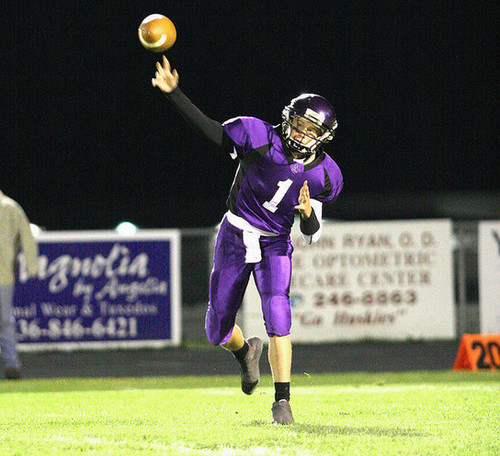
Sports Medicine physician Dr. Pietro Tonino of Loyola University Medical Center advises parents of high school athletes not to allow their children to play football because of the high risk of injuries they may sustain.

JamesBrown‘s insight:

Not allowing children to play contact/collision sports due to concussion is alarmist and unwarranted – rather focus on the correct management of the injury once it happens. 


While collision/contact sports such as American Football and rugby are associated with a risk of concussion, there is presently insufficient evidence to deny anyone access to these sports.


Yes, there are thousands of Football-related concussions per year, but how many hundreds of thousands of children participate in Football every year? And is Football more dangerous than driving your children in your car? These are questions that need to be considered for perspective. 


This being said, once a child has incurred a sport-related concussion. he/she should be removed from the game immediately. Thereafter, the parents need to be actively involved in process of managing the child to full recovery before returning to play.


The child who is not being provided this optimal managment should not be allowed to play Football or rugby – let the majority, who are managed adequately, continue having fun!

See on www.hngn.com

A comprehensive analysis of senior men’s professional injury studies in Rugby Union

Poster was presented by Sean Williams at ECSS 2013 held in Barcelona

Poster was presented by Sean Williams at ECSS 2013 held in Barcelona


The aim of this meta-analysis was to summarise existing literature relating to injuries in professional Rugby Union, and to determine the effect of factors such as playing level, playing position and match quarter.

The results confirm that incidence rates in professional Rugby Union can be considered high in comparison to some team sports (e.g. soccer), but are similar to other collision sports (e.g. rugby league and ice hockey).

The incidence rate in the first quarter of matches was substantially lower than other match periods, suggesting that fatigue may have an important role to play in match injury risk.

Around 12% of injuries were recurrences, and these were typically more severe than new injuries.However, it should be noted that no studies have directly compared the severity of recurrent injuries to their index injuries; it may be that some types of injury are more likely to reoccur, and if these tend to result in substantial time-loss then the recurrent injury severity figure may be skewed. This warrants investigation in future studies.

Injuries most commonly occur during the tackle, and the lower limb is the body region with the highest injury incidence; both of these areas may be targets for future injury prevention strategies.

This summary was written by the first author of the paper, Sean Williams.

You can find the full article http://link.springer.com/article/10.1007/s40279-013-0078-1

Sean Williams is a rugby science postgraduate student at the University of Bath, in the Department of Sport, Health and Exercise Science for Health.

You can contact Sean at S.Williams@bath.ac.uk or follow him on twitter @sw356.

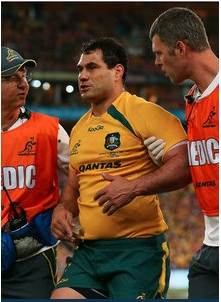
George Smith – Houdini of the Pitch Side Concussion Assessment (PSCA)?


Image


(Picture courtesy of http://www.planetrugby.com)

George Smith being allowed to return to the B&I Lions vs Australia final test after a clear cut concussion is indicative of the PSCA being used as a “get out of jail” card. 

The All Blacks version of this test is clear in that it should ONLY be performed for ambigious cases of concussion (http://files.allblacks.com/nzru_media_releases/2012/08_August/ITMC_PSCA_Process.pdf). The test is NOT required for a clear-cut concussion, which has one or more of the following characteristics:

  1. Tonic posturing
  2. Convulsions
  3. Loss of Consciousness (LOC) – as confirmed by medically trained person

Whether medically trained or not, it was obvious both at the time and while watching the many repeats of this incident that Smith had LOC and therefore did not require the PSCA to confirm his diagnosis. Furthermore, he couldn’t walk off the field unaided (not a “definition” of concussion, but noteworthy as to his lack of recovery from the incident).

This is unfortunate as the IRB took an enormous and admirable step in initiating the trial of the PSCA purely on the basis of improving the welfare of it’s players. As with any new trial, there could always be “teething issues” – and I assume this is one such issue that will be resolved quickly so that this test will have the intended effect.