Category: Player and Coach Development
Organised sport participation & objectively measured physical activity in kids…



Why are we still using the ‘tackle’ bag to train tackling?
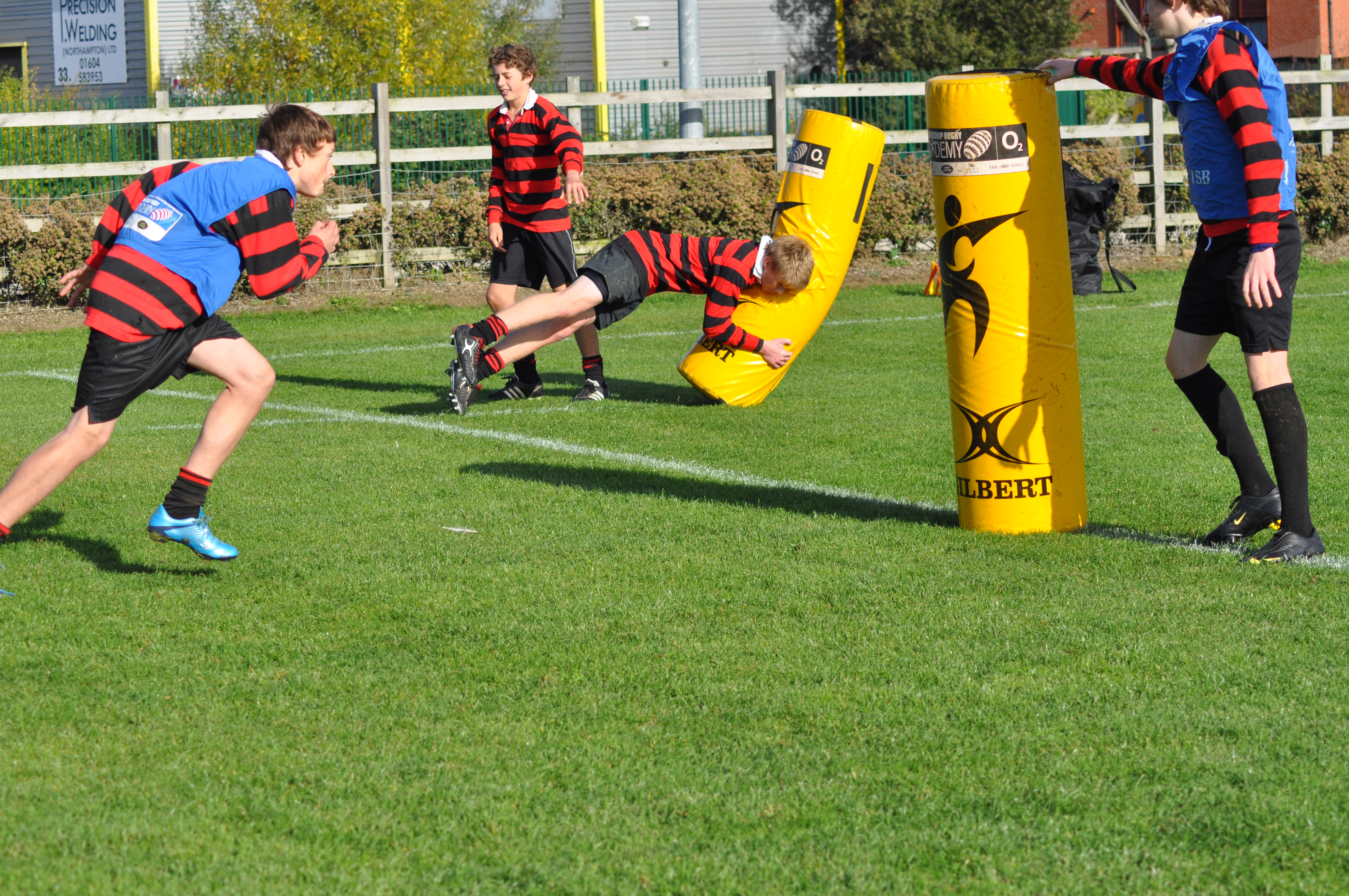
The origin and history of the tackle bag
Mimicking the ball-carrier?
Just posing the question highlights all the limitations of the tackle bag. The main one of course being that the tackle bag does not move compared to the ball-carrier in a match. There are a number of others too, weight, distinction between body parts, counter-drive etc.

Tackling technique
The obvious, major contention with the tackle bag is the technique players are learning and executing while ‘tackling’ the cylindrical shaped foam filled bag. During training session using the tackle bag, players typically dive into contact. Add into the drill a conditioning component (a common practice), players tend to start falling into contact. Technically speaking, this goes against most (if not all) safe and effective techniques prescribed for executing a tackle. I will refrain from going into detail and compare specific techniques required for safe and effective tackling, and the techniques used when using the tackle bag – we try to keep these articles short.
Scientific Research?
Studies specifically comparing techniques executed when using different equipment compared to live tackle training and tackling during matches don’t exist (to my knowledge). With that said, the tackle bag is mentioned in some studies looking at the tackle event. For example, in a paper on attitude and behaviour of junior rugby union players towards tackling during training and match play, the tackle bag was ranked in the top five most frequently used methods for coaching the tackle. One of the lowest ranked methods was ‘‘live tackling in a 1 vs. 1 player grid’. These findings imply that coaches prefer using padded equipment such as the tackle bag or shield rather than live 1 vs. 1 tackling, perhaps in an attempt to safeguard the players from injury in training. While the use of the padded equipment may arguably lower the risk of injury in training compared to live tackling, tackle bags and shields do not mimic real match conditions, and therefore may increase the risk of injury in matches. Other studies used the tackle bag as part of their methods to investigate muscle activity around the shoulder when tackling, and the forces produced when tackling a stationary tackle bag.

Sharief Hendricks
References
Hendricks, S., Matthews, B., & Roode, B. (2014). Tackler characteristics associated with tackle performance in rugby union. European Journal of Sport Science. doi:10.1080/17461391.2014.905982
Usman, J., McIntosh, A. S., & Fréchède, B. (2011). An investigation of shoulder forces in active shoulder tackles in rugby union football. Journal of Science and Medicine in Sport, 1–6. doi:10.1016/j.jsams.2011.05.006
Horsley, I., & Herrington, L. (2006). Electromyographic analysis of the tackle within rugby football. Physical Therapy in Sport. doi:10.1186/1758-2555-1
Hendricks, S., Jordaan, E., & Lambert, M. (2012). Attitude and behaviour of junior rugby union players towards tackling during training and match play. Safety Science, 50(2), 266–284.
Research in Rugby growing exponentially-Rugby Research’s Top 15
Paging through the recently published book “The Science of Rugby” edited by Dr Craig Twist and Dr Paul Worsfold (link), which covers everything from strength and power training and match-day strategies for enhancing physical and technical performance, to nutrition and biomechanics in both rugby union and rugby league, I remembered there was a time not too long ago published research articles in rugby were few. To check that I was not falling victim to the recall bias, and because it is a Rugby World Cup year, I did a little Scopus search to determine the current status of research in rugby. Scopus is like Google, but for research papers. Scopus also organises information by year, source, country and affiliation.
So, the 1st search I did was for articles using the term “Rugby” in the title, abstract or part of the keywords. Using the term “Rugby” like this in Scopus means both League and Union papers will be included. Note, I did not exclude areas like humanities and business, and all data points may not represent full research articles. This is what we found…
Number of articles published on “Rugby”
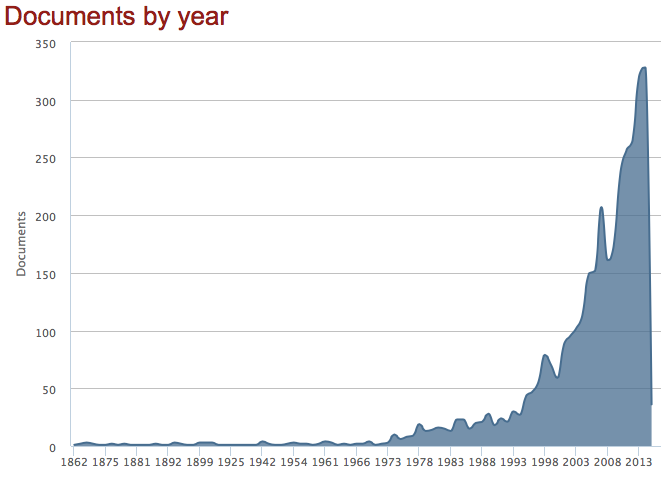
3051 published articles since 1862, 40% of these published in the last 5 years.
Top Journals publishing on “Rugby”
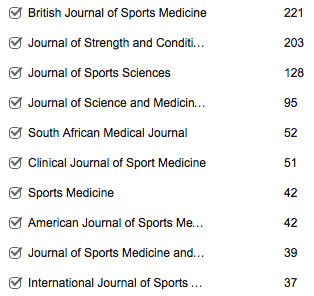
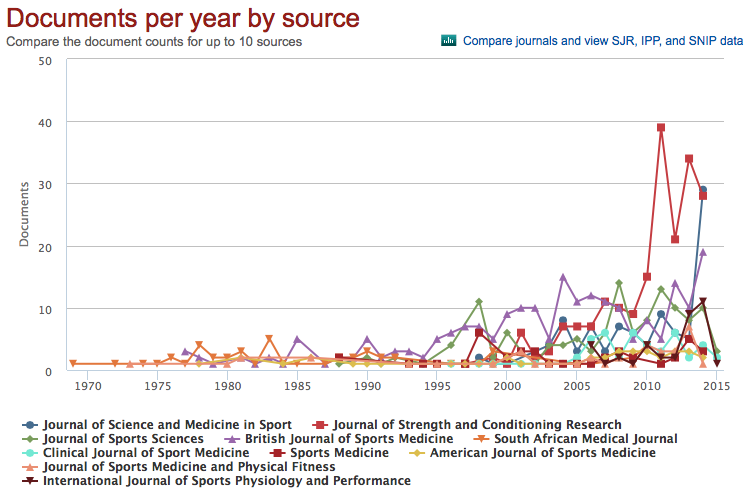
Top journals publishing in rugby are BJSM, JSCS, JSS, and JSMS. SAMJ was the first journal to publish on rugby, BJSM the most consistent, and JSCS the most number of publications in the last 5 years.
Top Authors publishing in “Rugby”
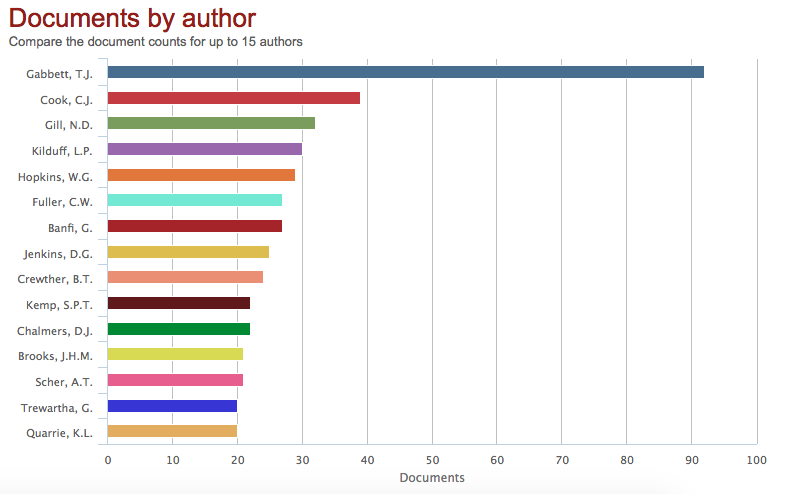
Most published author in rugby- Tim Gabbett (Gabbett Performance)-no surprise there. The head S&C coach of the top performing team in the world, Nicholas Gill, is the 3rd most published author in rugby research. This says something.
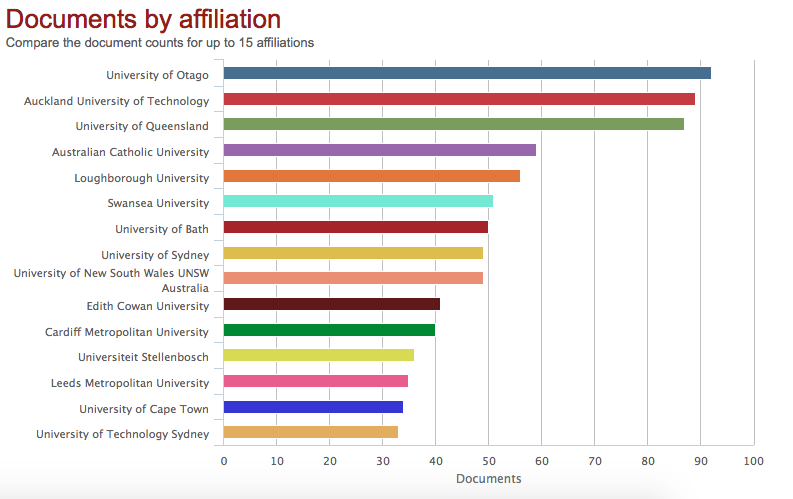
Top affiliations publishing in “Rugby”
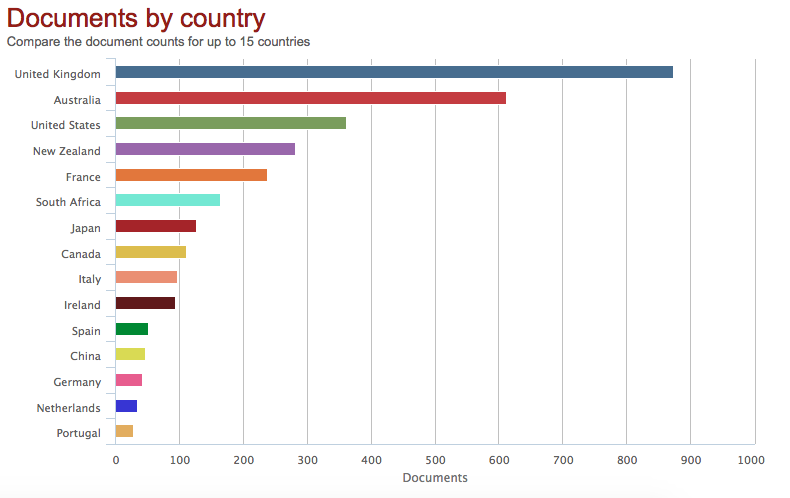
Top countries publishing in “Rugby”
We did the same search for “Rugby Union”. Using this search term will only output papers containing “Rugby Union” in the title, abstract or part of the keywords.
Number of articles published on “Rugby Union”
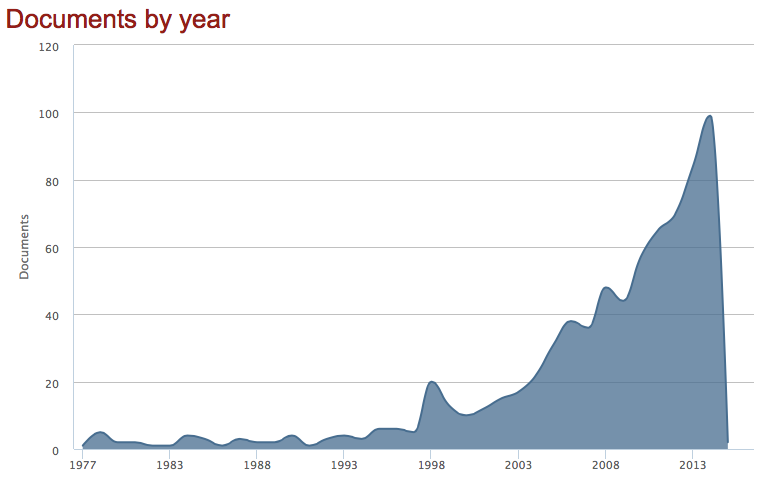
742 articles. Approximately 50% published in the last 5 years.
Top Journals publishing on “Rugby Union”

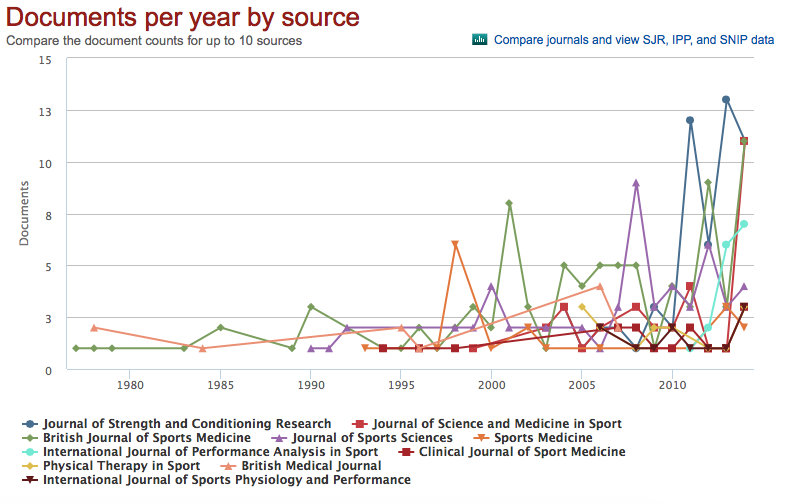
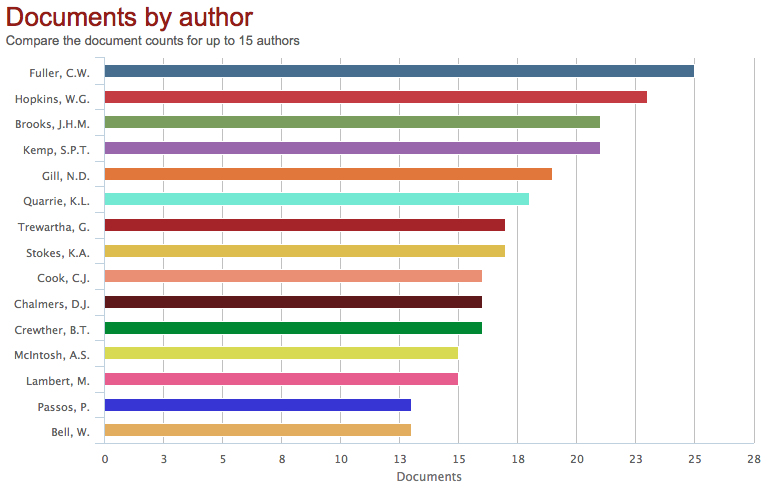
Top Authors publishing in “Rugby Union”
Top affiliations publishing in “Rugby Union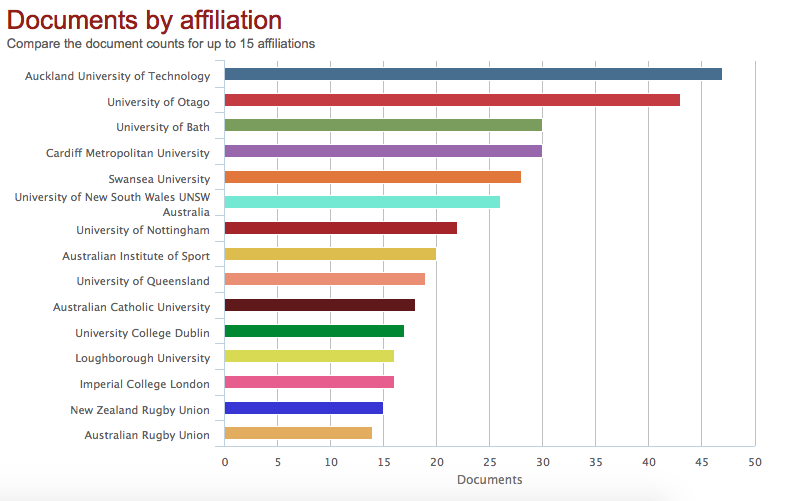 Top countries publishing in “Rugby Union”
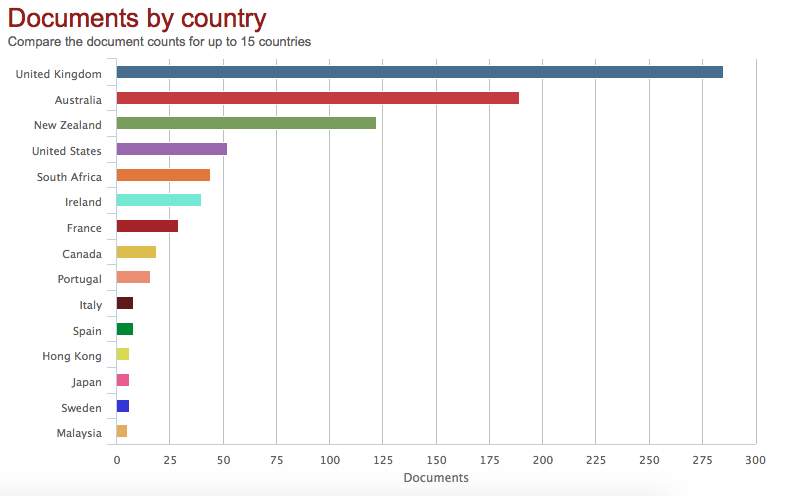
I have a particular interest in the tackle situation. So, I did a search for “Rugby” AND “tackle”. Below are the results…
Number of articles published on “Rugby” AND “tackle”
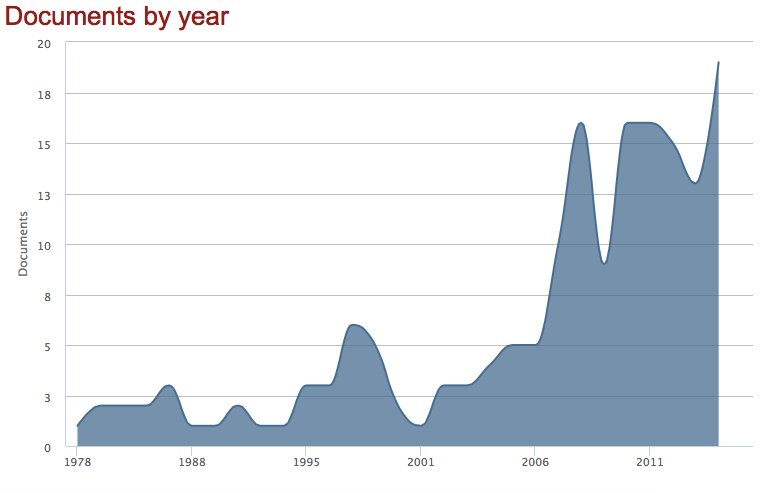 170 articles. Approximately 46% published in the last 5 years.
Top Journals publishing on “Rugby” AND “tackle”
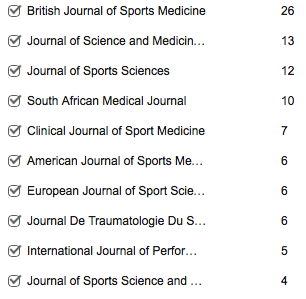
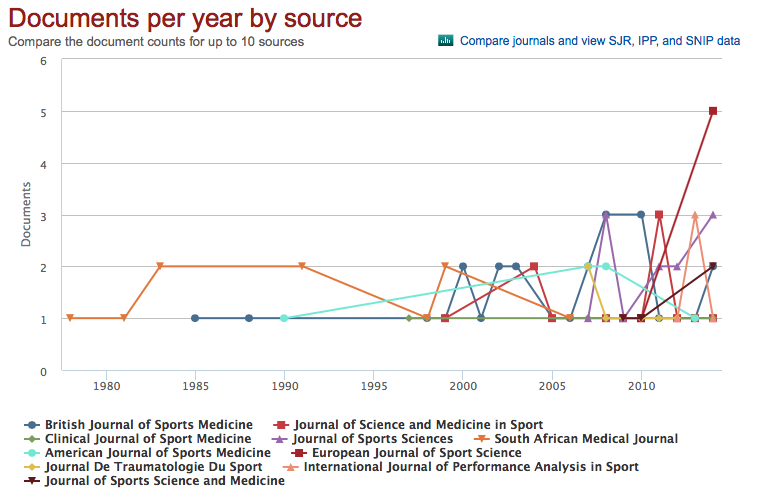
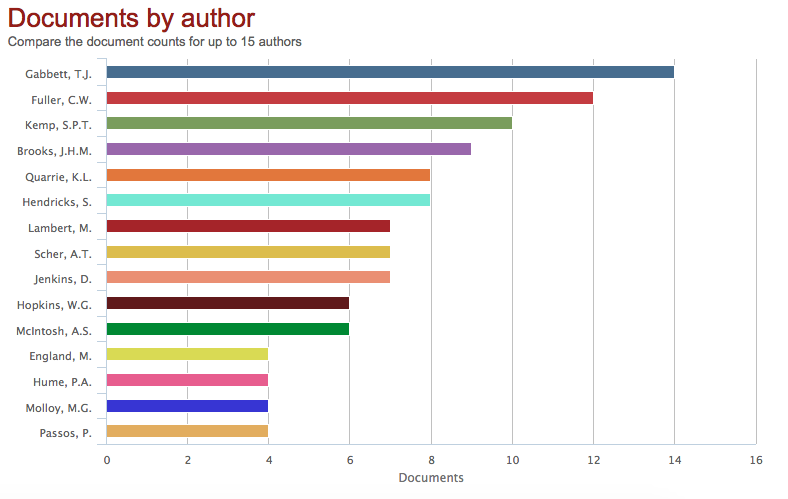
Top authors publishing on “Rugby” AND “tackle”
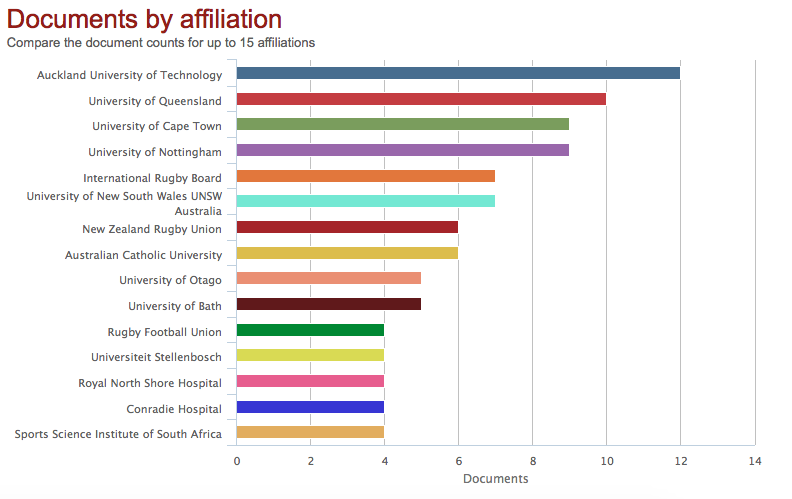
Top affiliations publishing on “Rugby” AND “tackle”
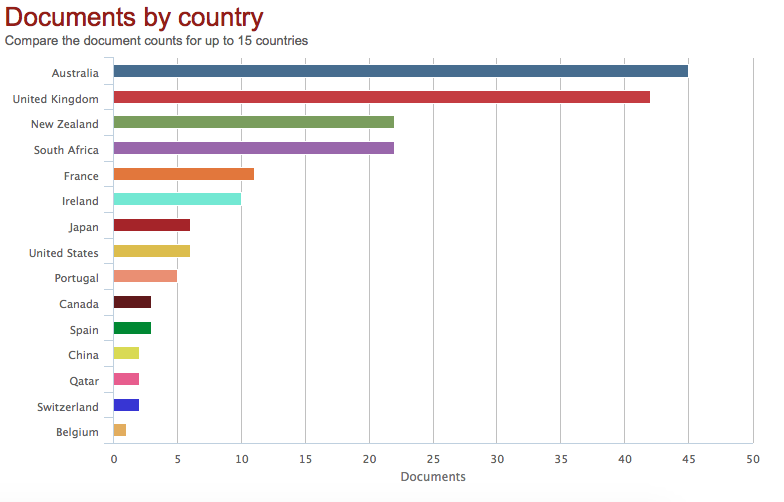
Top countries publishing on “Rugby” AND “tackle”
We could do the same searches for any aspect of the sport really (for example, the scrum).
Although research in rugby may be growing at a rapid pace, rugby (league and union combined) is still behind other team sports like football (I did a small search on “football” OR “soccer” and Scopus produced 26941 papers), and there is plenty of scope for research (not too sad about this). There are obvious products from this body of work (better conditioned players, more knowledgeable coaches, reducing the risk of injury, etc), but in terms of conducting research, the exponential increase in rugby research somewhat forces scientists to be creative, and highly applied in their studies.
Sharief Hendricks
 Rugby Science