Category: Player and Coach Development
Research in Rugby growing exponentially-Rugby Research’s Top 15
Paging through the recently published book “The Science of Rugby” edited by Dr Craig Twist and Dr Paul Worsfold (link), which covers everything from strength and power training and match-day strategies for enhancing physical and technical performance, to nutrition and biomechanics in both rugby union and rugby league, I remembered there was a time not too long ago published research articles in rugby were few. To check that I was not falling victim to the recall bias, and because it is a Rugby World Cup year, I did a little Scopus search to determine the current status of research in rugby. Scopus is like Google, but for research papers. Scopus also organises information by year, source, country and affiliation.
So, the 1st search I did was for articles using the term “Rugby” in the title, abstract or part of the keywords. Using the term “Rugby” like this in Scopus means both League and Union papers will be included. Note, I did not exclude areas like humanities and business, and all data points may not represent full research articles. This is what we found…
Number of articles published on “Rugby”
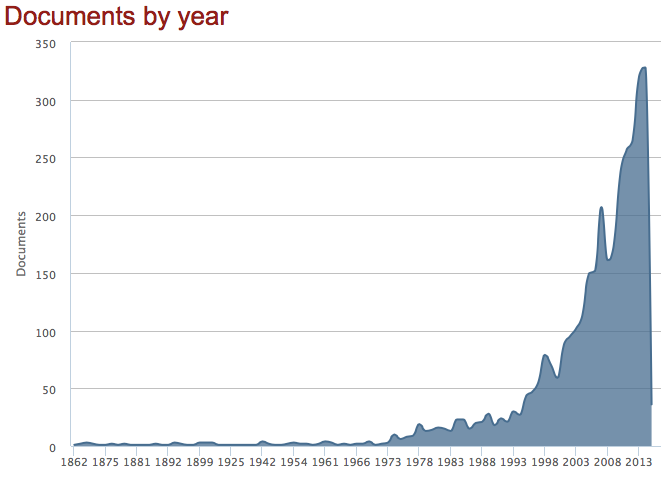
3051 published articles since 1862, 40% of these published in the last 5 years.
Top Journals publishing on “Rugby”
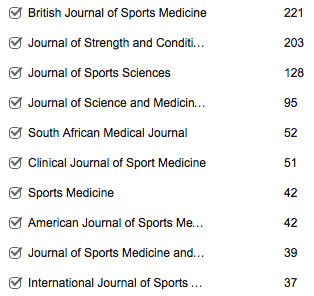
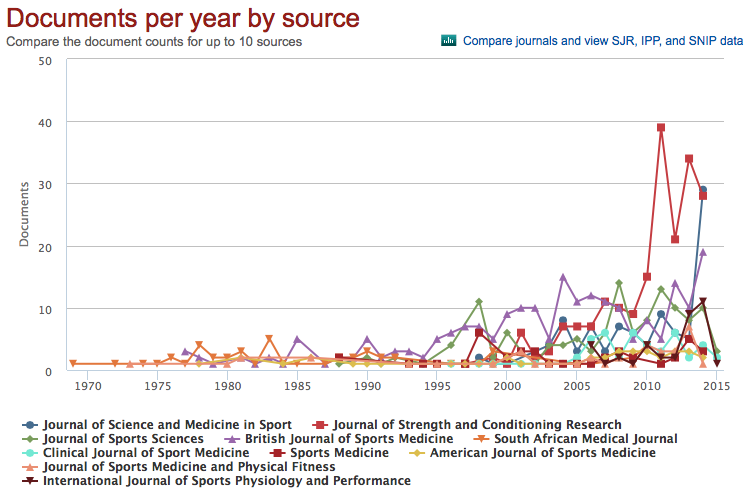
Top journals publishing in rugby are BJSM, JSCS, JSS, and JSMS. SAMJ was the first journal to publish on rugby, BJSM the most consistent, and JSCS the most number of publications in the last 5 years.
Top Authors publishing in “Rugby”
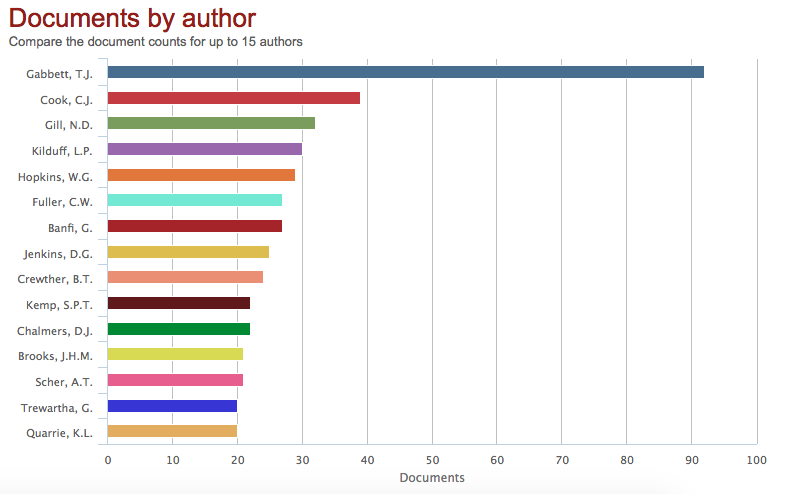
Most published author in rugby- Tim Gabbett (Gabbett Performance)-no surprise there. The head S&C coach of the top performing team in the world, Nicholas Gill, is the 3rd most published author in rugby research. This says something.
Top affiliations publishing in “Rugby”
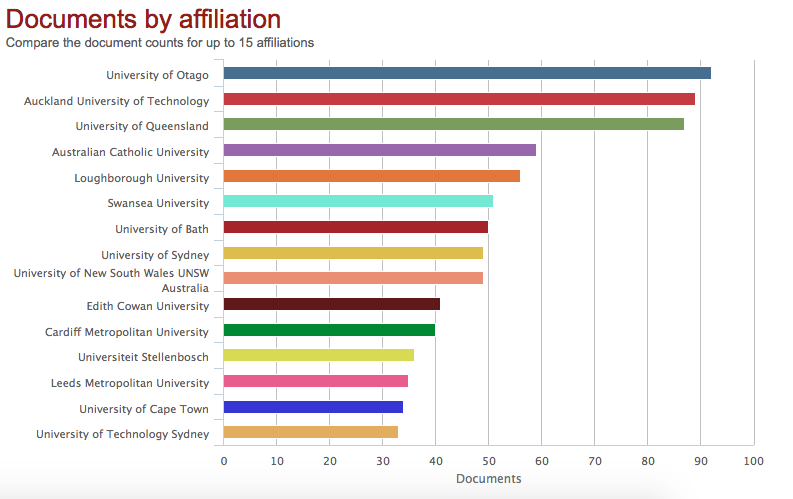
Top countries publishing in “Rugby”
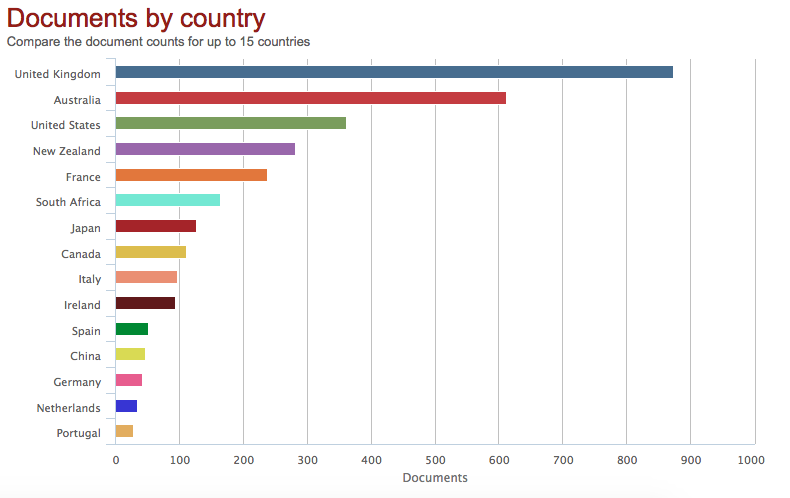
We did the same search for “Rugby Union”. Using this search term will only output papers containing “Rugby Union” in the title, abstract or part of the keywords.
Number of articles published on “Rugby Union”
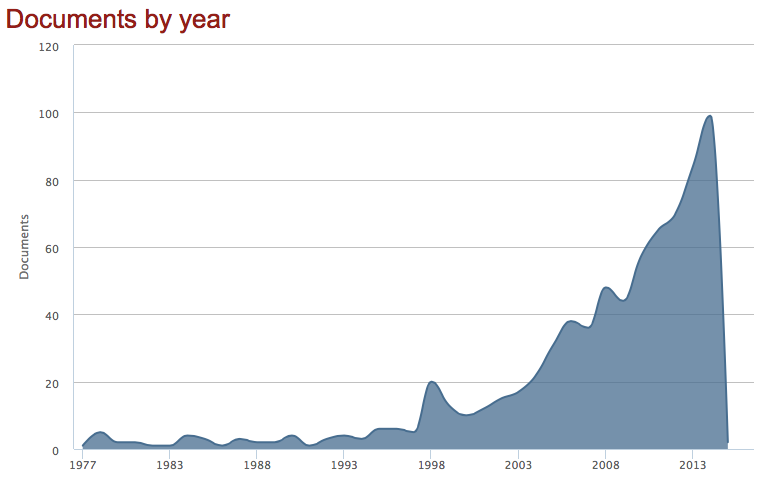
742 articles. Approximately 50% published in the last 5 years.
Top Journals publishing on “Rugby Union”
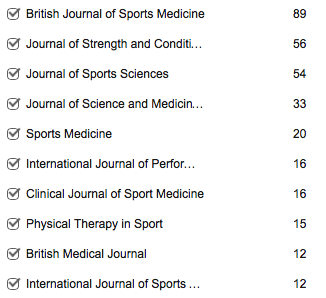
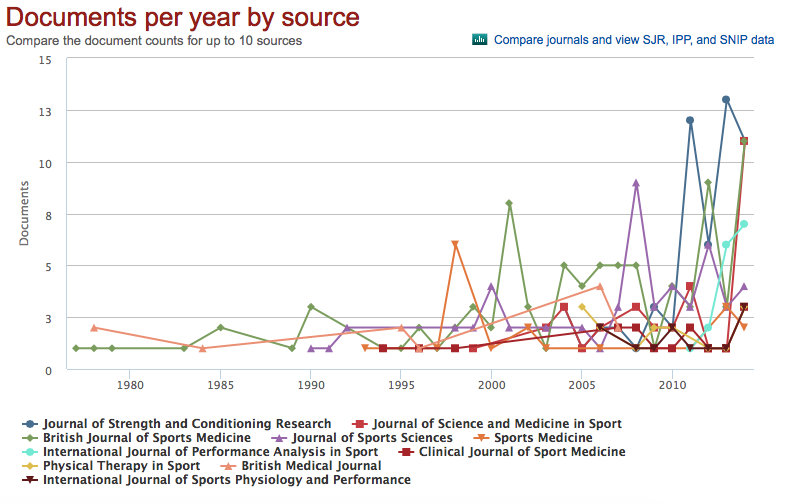
Top Authors publishing in “Rugby Union”
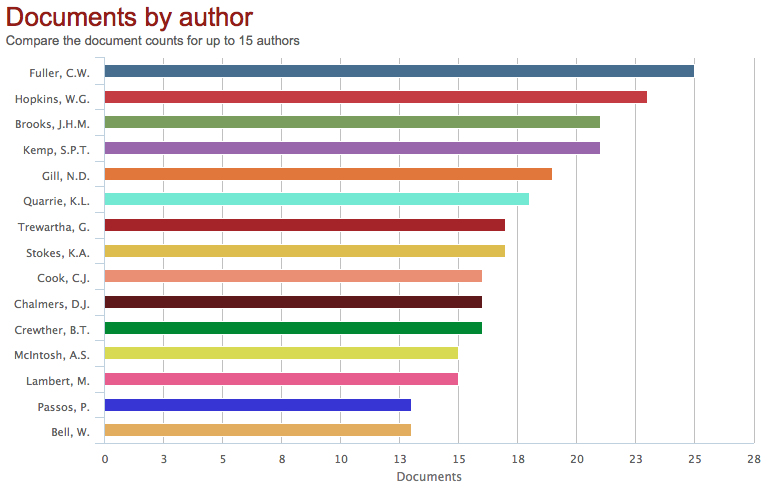
Top affiliations publishing in “Rugby Union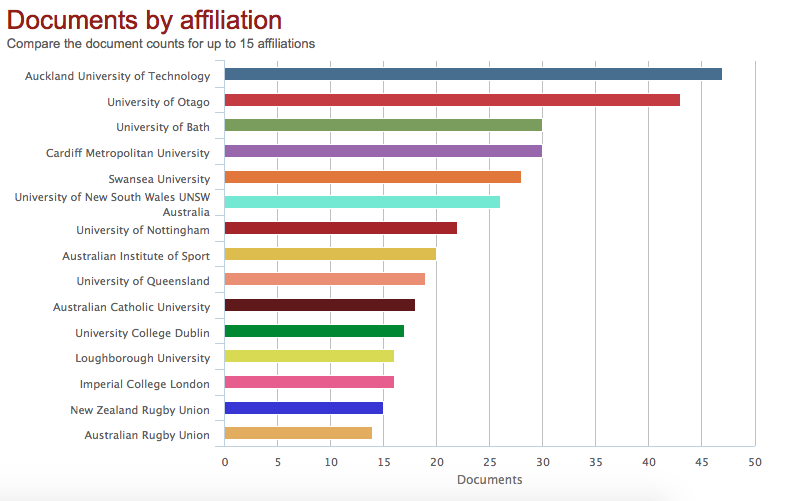 Top countries publishing in “Rugby Union”
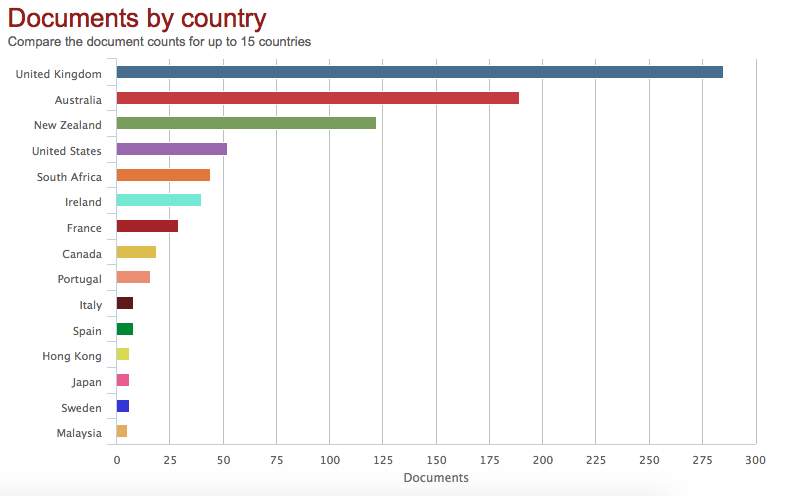
I have a particular interest in the tackle situation. So, I did a search for “Rugby” AND “tackle”. Below are the results…
Number of articles published on “Rugby” AND “tackle”
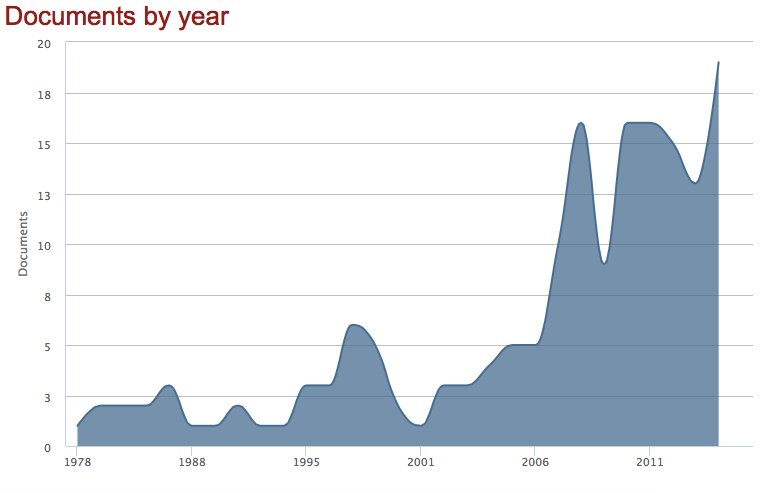 170 articles. Approximately 46% published in the last 5 years.
Top Journals publishing on “Rugby” AND “tackle”
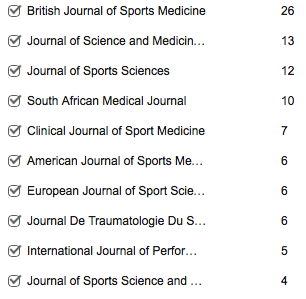
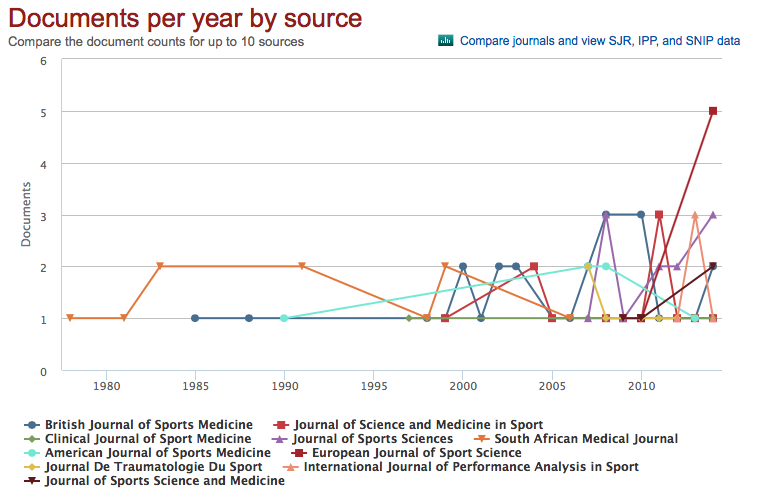
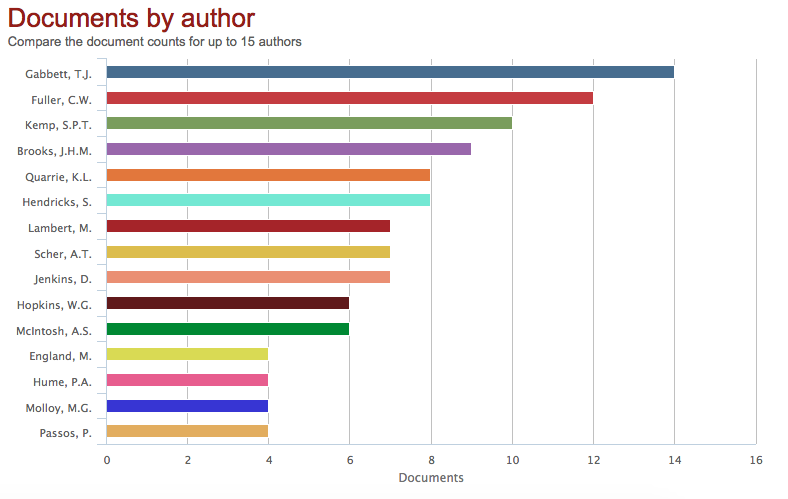
Top authors publishing on “Rugby” AND “tackle”
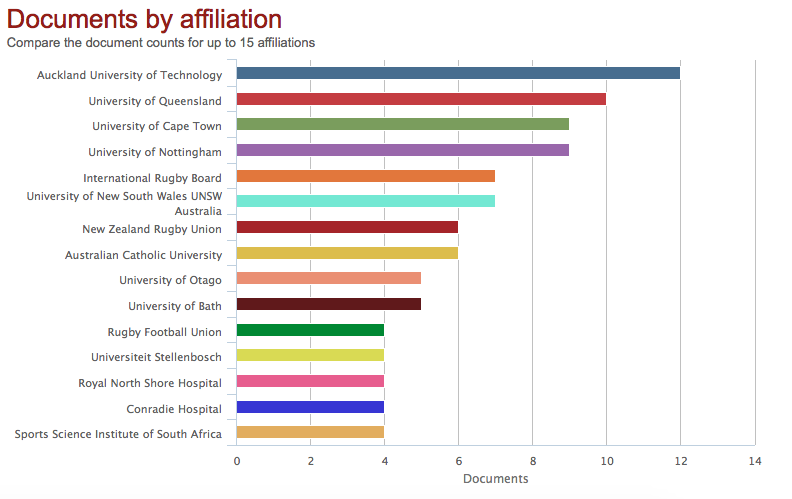
Top affiliations publishing on “Rugby” AND “tackle”
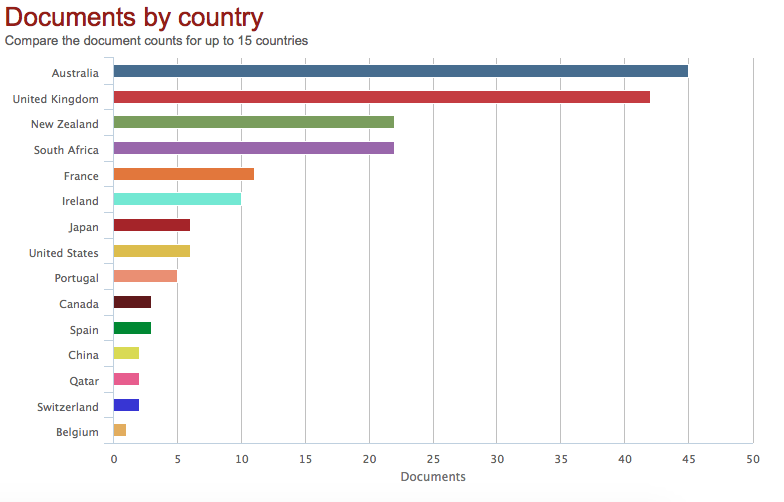
Top countries publishing on “Rugby” AND “tackle”
We could do the same searches for any aspect of the sport really (for example, the scrum).
Although research in rugby may be growing at a rapid pace, rugby (league and union combined) is still behind other team sports like football (I did a small search on “football” OR “soccer” and Scopus produced 26941 papers), and there is plenty of scope for research (not too sad about this). There are obvious products from this body of work (better conditioned players, more knowledgeable coaches, reducing the risk of injury, etc), but in terms of conducting research, the exponential increase in rugby research somewhat forces scientists to be creative, and highly applied in their studies.
Sharief Hendricks
Skill and the Philosophy of Play
Free-Kick
Asking the questions science has yet to answer.
When the term skill is mentioned, technical skills such passing, offloading in contact, kicking etc comes to mind. Within in a team sport like Rugby though, we are aware of mini-unit skills (set pieces) and the skill of executing tactics and strategy. Some evidence is now available for the most effective technical components of a skill, but not so much on mini-unit skills, unit skills, and the skill of executing tactics and strategy.
Throughout a player’s career or developmental pathway, emphasis and priority will be placed on certain skills over others, for example, contact skills vs non-contact skills, attack vs defence, technical over game strategy etc. This emphasis ratio or priority list is most likely governed by the team’s philosophy of play. This philosophy of play seems evident in the recent internationals, where teams are focussed on set-piece play and contact for example, compared to others teams who may run the ball more. Some teams also have a good balance. This philosophy of play is not only evident at the international level. I’m sure we all have an understanding of team’s philosophy of play within our respective local competitions.
So, what if we want to change the philosophy?
How do we go about this?
Is finding the right balance the way to go?
Are we negatively influencing a player’s development if we don’t get the balance right?
Do you have real life experience on how you changed the philosophy of play within a team? Please let us know your thoughts.
SH
Is there a need for a paradigm shift in school sports programming?
Free Kick
The current mindset of school sports is designed for short term competitive performance, but is there associated long term benefits from this?
While this mindset may facilitate performance in the early years it may be detrimental to the optimal development of the young athlete and compromise future performance. Moreover, it is likely to lead to burnout and possibly increase their relative risk of sustaining overuse injuries in their young careers. (Jefferys, I. 2008; SCJ)
“It is evident that many / most 1st year high school’ers lack much basic fitness and athleticism, thus starting out on a very low base level of physical fitness and possibly technical skill. Even though to some degree general sports skill may be fairly well developed, the same is often not true for fundamental movement patterns. Therefore, the need for effective programming to redress these issues is paramount and possibly requires a new model of development to be devised which builds these elements into long term model rather than a short term “fix”.” (Jefferys, I. 2008; SCJ)
What are your thoughts?
Wayne Lombard
 Rugby Science