Category: Player and Coach Development
Where do coaches get their knowledge from?
A study by Drs John Stoszkowski (@JohnStoszkowski) and Dave Collins (@DaveGM4P) highlights the sources of knowledge for coaches. This full study is available free at the following link currently: http://www.tandfonline.com/doi/full/10.1080/02640414.2015.1072279#.VcSqR3j3Dbw
It was also brilliantly summarised by infographic guru Dr Yann Le Meur of YLMSportScience (@YLMSportScience):

In summary, it seems that most coaches prefer informal learning (as opposed to formal or non-formal) which includes peer discussion, watching other coaches, books and websites, online social networks and YouTube. As study author Dr John Stoszkowski says about the findings in a recent tweet: “Hence [the] need to teach/support coaches to approach info in a critical way in order to make sure self-directed learning optimal“!
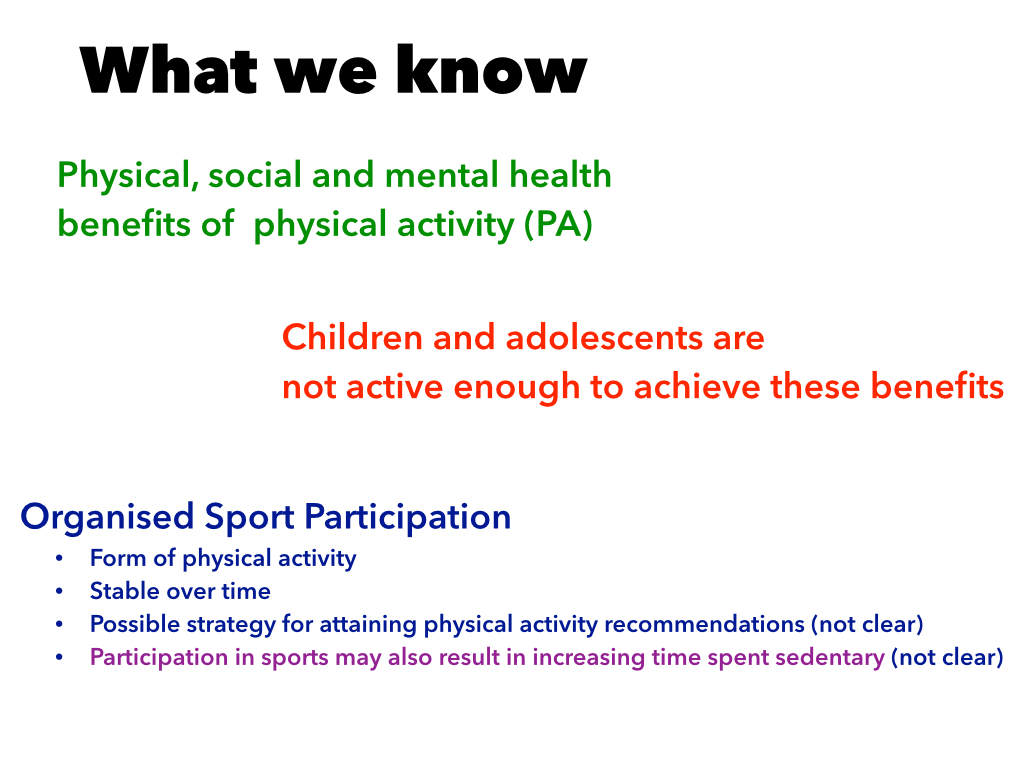
Organised sport participation & objectively measured physical activity in kids…



Why are we still using the ‘tackle’ bag to train tackling?
The origin and history of the tackle bag
Mimicking the ball-carrier?
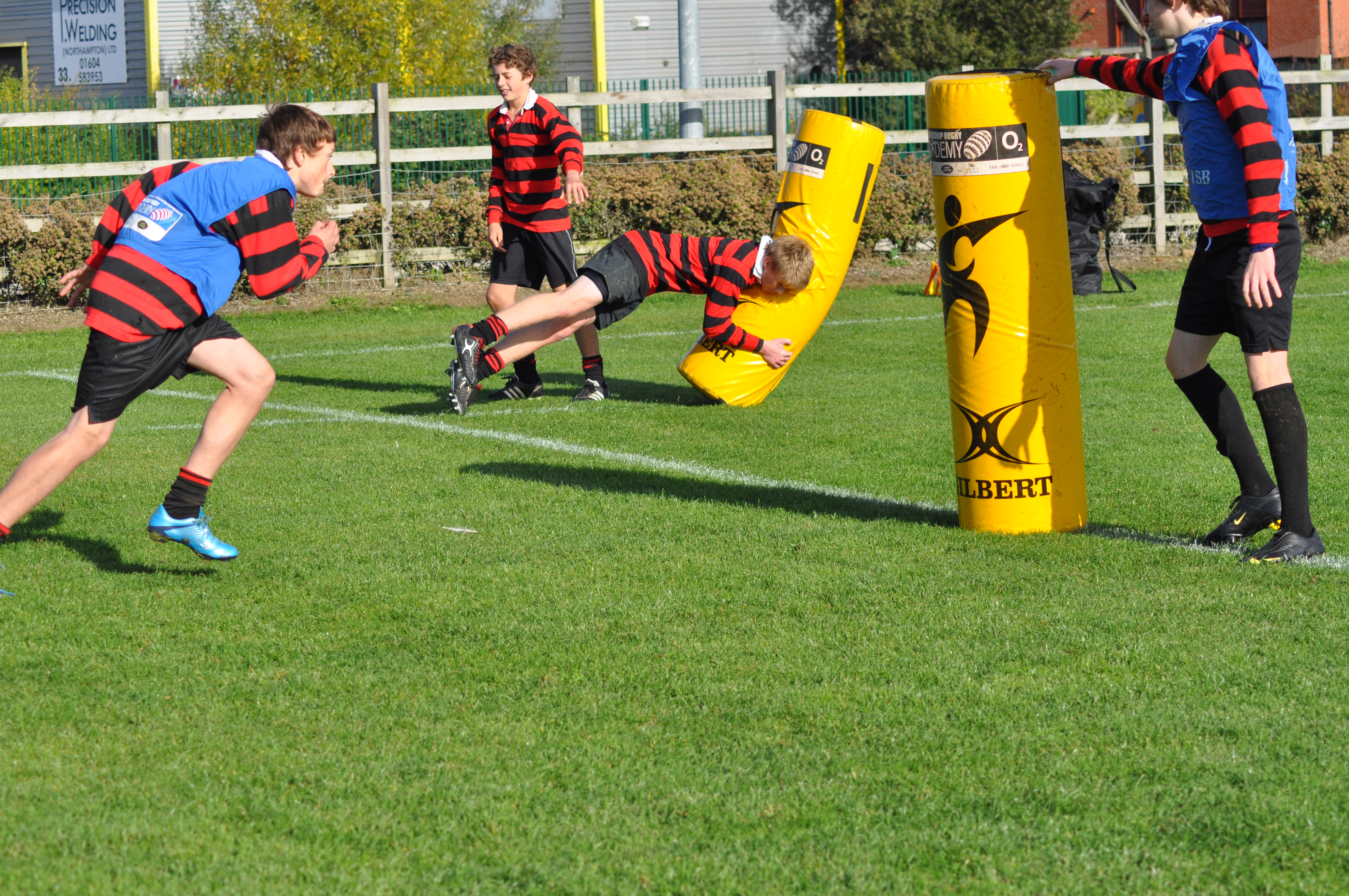
Just posing the question highlights all the limitations of the tackle bag. The main one of course being that the tackle bag does not move compared to the ball-carrier in a match. There are a number of others too, weight, distinction between body parts, counter-drive etc.

Tackling technique
The obvious, major contention with the tackle bag is the technique players are learning and executing while ‘tackling’ the cylindrical shaped foam filled bag. During training session using the tackle bag, players typically dive into contact. Add into the drill a conditioning component (a common practice), players tend to start falling into contact. Technically speaking, this goes against most (if not all) safe and effective techniques prescribed for executing a tackle. I will refrain from going into detail and compare specific techniques required for safe and effective tackling, and the techniques used when using the tackle bag – we try to keep these articles short.
Scientific Research?
Studies specifically comparing techniques executed when using different equipment compared to live tackle training and tackling during matches don’t exist (to my knowledge). With that said, the tackle bag is mentioned in some studies looking at the tackle event. For example, in a paper on attitude and behaviour of junior rugby union players towards tackling during training and match play, the tackle bag was ranked in the top five most frequently used methods for coaching the tackle. One of the lowest ranked methods was ‘‘live tackling in a 1 vs. 1 player grid’. These findings imply that coaches prefer using padded equipment such as the tackle bag or shield rather than live 1 vs. 1 tackling, perhaps in an attempt to safeguard the players from injury in training. While the use of the padded equipment may arguably lower the risk of injury in training compared to live tackling, tackle bags and shields do not mimic real match conditions, and therefore may increase the risk of injury in matches. Other studies used the tackle bag as part of their methods to investigate muscle activity around the shoulder when tackling, and the forces produced when tackling a stationary tackle bag.

Sharief Hendricks
References
Hendricks, S., Matthews, B., & Roode, B. (2014). Tackler characteristics associated with tackle performance in rugby union. European Journal of Sport Science. doi:10.1080/17461391.2014.905982
Usman, J., McIntosh, A. S., & Fréchède, B. (2011). An investigation of shoulder forces in active shoulder tackles in rugby union football. Journal of Science and Medicine in Sport, 1–6. doi:10.1016/j.jsams.2011.05.006
Horsley, I., & Herrington, L. (2006). Electromyographic analysis of the tackle within rugby football. Physical Therapy in Sport. doi:10.1186/1758-2555-1
Hendricks, S., Jordaan, E., & Lambert, M. (2012). Attitude and behaviour of junior rugby union players towards tackling during training and match play. Safety Science, 50(2), 266–284.
 Rugby Science