Category: Strength and Conditioning
Influence of Muscular Strength and Power on Tackling Ability in Rugby League
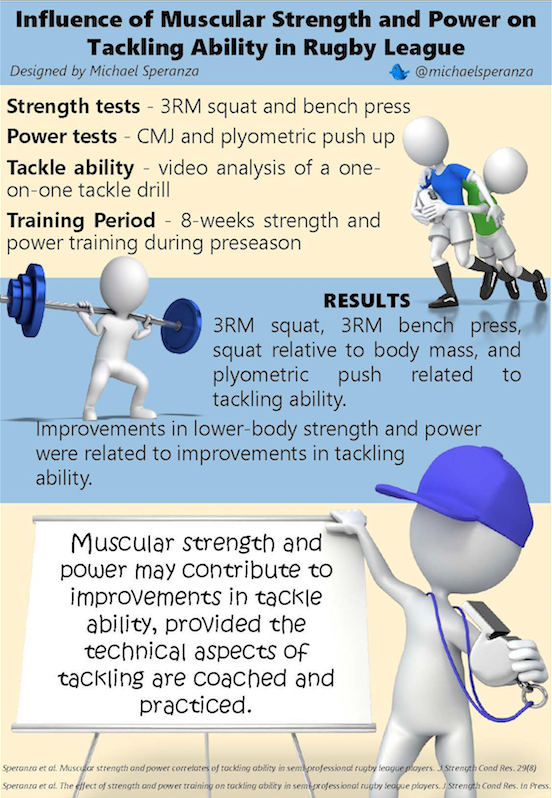
Michael Speranza is a Sport Scientist at the School of Exercise Science, Australian Catholic University, Brisbane, Australia. He is also the Strength and Conditioning Coach for the Norths Devils RLFC and Brisbane North Cougars Netball team. According to his Twitter Bio, he is generally a good bloke. Based on his willingness to translate his work on RugbyScientists.com, we agree with the Twitter bio :).
Understanding Neuromuscular Adaptations in High Performance Athletes: Part 2
So after we have covered the fundamental principles of muscular strength development lets have a look at a few more variables that need to be considered.
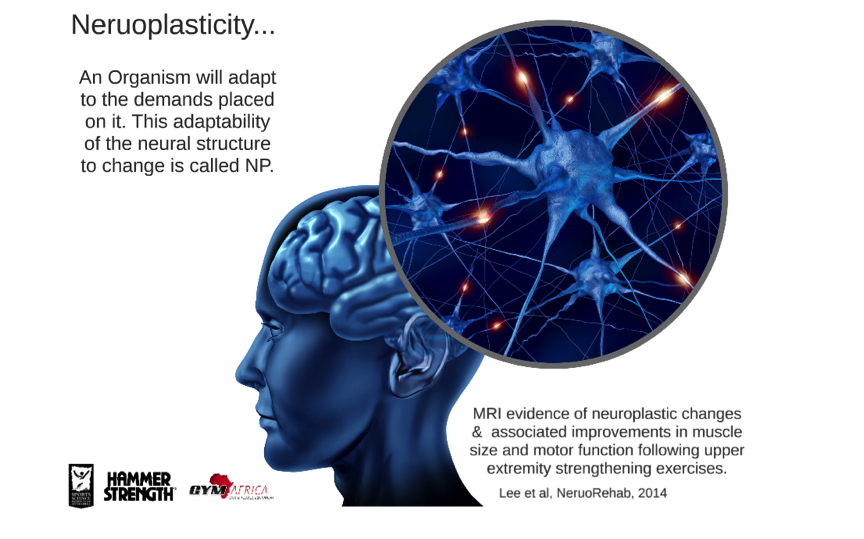
Its important to understand that the brain is able to adapt to any stimulus that it is exposed to as long as it has repeated exposure for a pro-longed period of time.
Thus, from a strength-training point of view, if we progressively overload our athletes, we should theoretically find that they keep getting stronger.
However, if we continuously expose them to the same / similar stimulus we will probably find that they plateau in their strength development. This not only due to a decrease in morphological but also neuromuscular adaptations
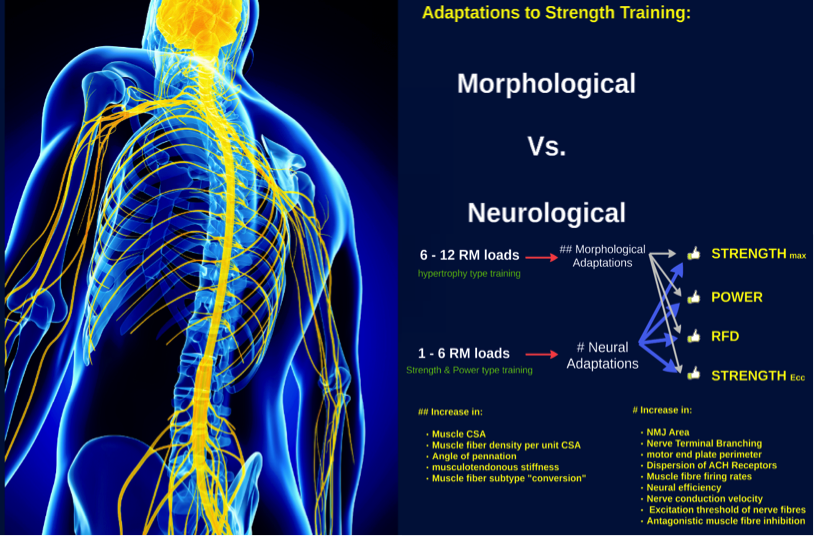
It is for this reason that S&C specialists need to understand how various loading parameters may affect either morphological or neurological adaptations.
Aagard, 2003, proposed that although loads ranging from 1 – 12 RM have affects on both morphological and neurological characteristics such as, STRENGTH, POWER and RATE OF FORCE DEVELOPMENT. It was in fact loads between 1- 6 RM that have a greater effect on these characteristics, due to the neuromuscular adaptations.
Thus, in turn suggestion that it was the neurological adaptations that may be of greater benefit to elite level athletes.
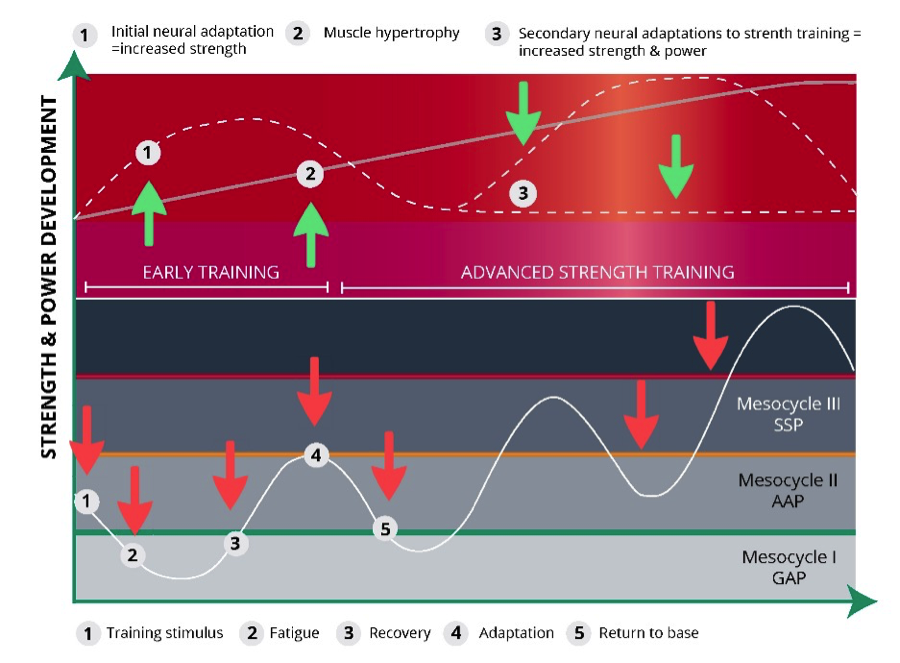
So from a practical programming perspective we can use the figure above as a “blue print” to our resistance training prescription.
In the early stages of training most athletes experience an increase of strength due to neural adaptations. However, this decreases during “early” training phases, with morphological adaptations playing “catch-up”.
At this time, if a new strength-training stimulus is not added to an athletes training routine, he/she may plateau and not experience any further adaptations. However, the converse is also true, if the stimulus is adjusted too often, you will find that the athletes do not have sufficient time to recover or adapt to the stimulus and thus not improve their performance.
Secondary neural adaptations can be expected if a change is stimulus is imposed on an athlete through the utilisation of various advanced strength-training methods and sufficient recovery time.
Take Home Message:
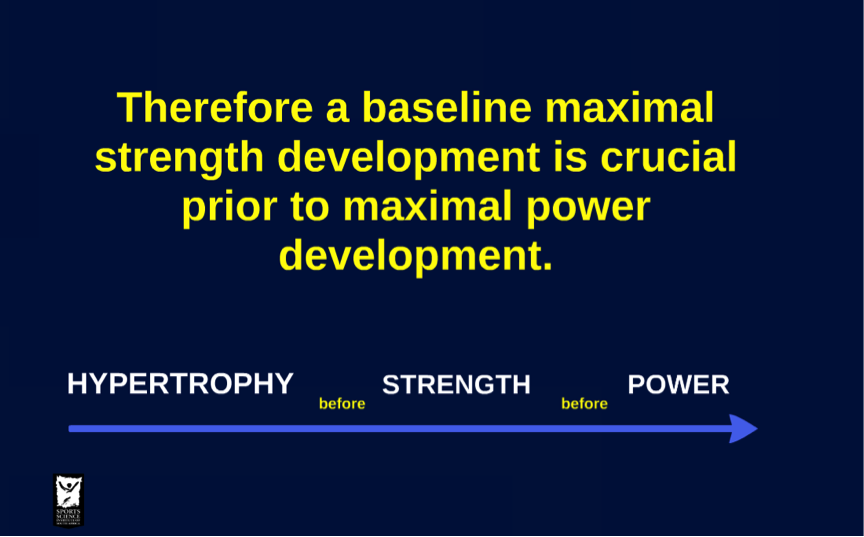
All strength training program prescription should follow a logical order, and each phase should compliment the next in order to get the best training results. Enhancing the neuromuscular ability of athletes leads to the greatest potential for training transfer into their sporting performance. Although important, to a certain extent and depending on the sport, morphological adaptations should not be the sole focus of any elite level athletes resistance training prescription.
Remember we are training athletes to be great at their sport not great at gym!
Therefore training transfer should be the primary emphasis of all strength & conditioning programs for High Performance Athletes.
Regards,
Wayne
Moving beyond the “brainless” model of resistance training

What is the LEAST amount of training we need our athletes to do to get the BEST results out of them?
What is the role of the central nervous system in strength development?
In a series of posts, we will attempt to answer these questions.
In this post, we will cover some basic muscle physiology.
There are 2 principles that govern the ability of an athlete to develop maximal strength…
1) Henman’s Size Principle
The recruitment threshold of each motor unit is governed directly by the size of its axon. Thus, all motor units are recruited in an ascending order according to their relevant size.
Larger motor units having higher recruitment thresholds produce greater amounts of force, whereas smaller motor units have lower recruitment thresholds and produce less force. Due to their smaller threshold potential smaller motor units are recruited first (Baechle & Earle, 2008; Kraemer & Looney, 2012).
It is for this reasons that well- planned sequential (Hypertrophy –> strength –> power –> complex) resistance training phases are implemented, as it is only the activated motor units that undergo anabolism (“building”). Whereas catabolism (“breakdown”) is found to occur in non-activated motor units, due to exposure catabolic substances such as, inflammatory cytokines, free radicals, cortisol, etc. (Kraemer & Looney, 2012).

The Selective Recruitment Principle
The All-OR-NONE law, i.e. number of motor units recruited, as well as the number of motor units in a muscle, plays a role in power production. However, an exception to the rule is that well-trained athletes may be able to inhibit lower threshold units and in their place, activate the higher threshold motor units, thus increasing rate of force development and power output.
Check out the paper in Strength & Conditioning Journal, “Underlying mechanisms and physiology of muscular power” by Kramer et al (2012) for more detail.
Further to the adaptions above, the neuromuscular junction (NMJ) also undergoes the following changes:
- Increase in NMJ area
- Increase in length of nerve terminal branching
- Increased motor end plate perimeter
- Greater dispersion of muscle receptors
In practice, implementing various advanced strength-training methods increase motor unit recruitment. For untrained individuals though, the ability to recruit fast twitch fibers/high threshold motor units may be limited. Motor unit recruitment for untrained individuals is sparked by the motor cortex activity and through neural efficiency.
Your thoughts?
Regards,
Wayne
 Rugby Science