Skill and the Philosophy of Play

Free-Kick

Asking the questions science has yet to answer.

When the term skill is mentioned, technical skills such passing, offloading in contact, kicking etc comes to mind. Within in a team sport like Rugby though, we are aware of  mini-unit skills (set pieces) and the skill of executing tactics and strategy. Some evidence is now available for the most effective technical components of a skill, but not so much on mini-unit skills, unit skills, and the skill of executing tactics and strategy.

Throughout a player’s career or developmental pathway, emphasis and priority will be placed on certain skills over others, for example, contact skills vs non-contact skills, attack vs defence, technical over game strategy etc. This emphasis ratio or priority list is most likely governed by the team’s philosophy of play. This philosophy of play seems evident in the recent internationals, where teams are focussed on set-piece play and contact for example, compared to others teams who may run the ball more. Some teams also have a good balance. This philosophy of play is not only evident at the international level. I’m sure we all have an understanding of team’s philosophy of play within our respective local competitions.

So, what if we want to change the philosophy?

How do we go about this?

Is finding the right balance the way to go?

Are we negatively influencing a player’s development if we don’t get the balance right?

Do you have real life experience on how you changed the philosophy of play within a team? Please let us know your thoughts.

SH
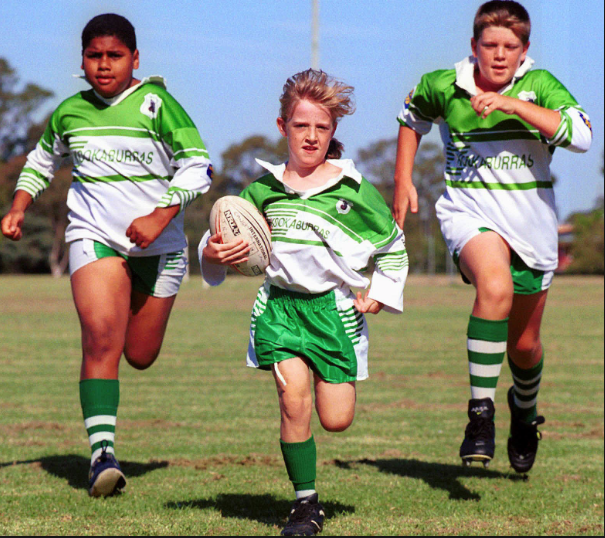
Is strength training safe for youth athletes?

According to the UKSCA (United Kingdom Strength and Conditioning Association), ASCA (Australian Strength and Conditioning Association), NSCA (National Strength and Conditioning Association) and BASES (British Association of Sports and Exercise Sciences) consensus statements, strength training is safe and effective for youth athletes if prescribed and supervised by a qualified professional that ensures that the exercises are being conducted with the correct techniques, age appropriate loading and that the correct progressions are followed.

Screen Shot 2014-11-19 at 1.43.48 PM

(www.rlcm.com.au)

Strength training also helps ensure that youth athletes bodies are physically prepared for the forces they may experience during their actual sports that they are involved with, hence decreasing the risk of injuries.

What are your thoughts on this?

Wayne


Screen Shot 2014-11-18 at 9.34.05 AMScreen Shot 2014-11-18 at 9.34.28 AMScreen Shot 2014-11-18 at 9.34.51 AM

by Sam O’ Connor

Sam O’ Connor is an Honours student at the University of Cape Town, researching concussion injury mechanism and it’s relationship to contact technique.

References

Marshall SW, Loomis DP, Waller AE, et al. Evaluation of protective equipment for prevention of injuries in rugby union. Int J Epidemiol 2005;34:113–18.

Hollis SJ, Stevenson MR, McIntosh AS, et al. Incidence, risk, and protective factors of mild traumatic brain injury in a cohort of Australian nonprofessional male rugby players. Am J Sports Med 2009;37:2328–33.

Kemp SPT, Hudson Z, Brooks JHM, et al. The epidemiology of head injuries in English professional rugby union. Clin J Sport Med 2008;18:227–34.

McIntosh AS, McCrory P, Finch CF, et al. Does padded headgear prevent head injury in rugby union football? Med Sci Sports Exerc 2009;41:306–13.

Abrahams S, McFie S, Patricios J, et al. Br J Sports Med 2014;48:91–97

Continue reading